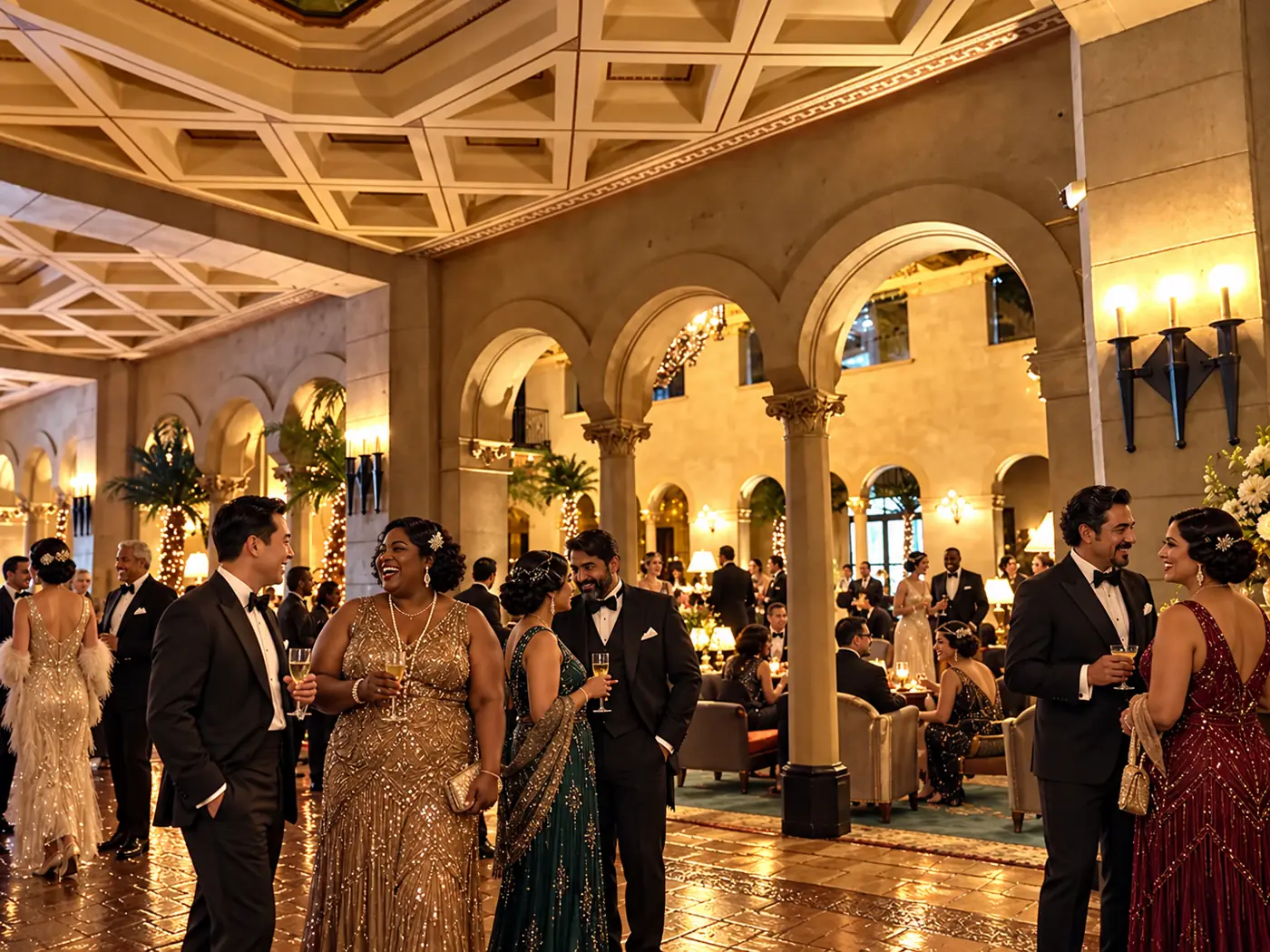
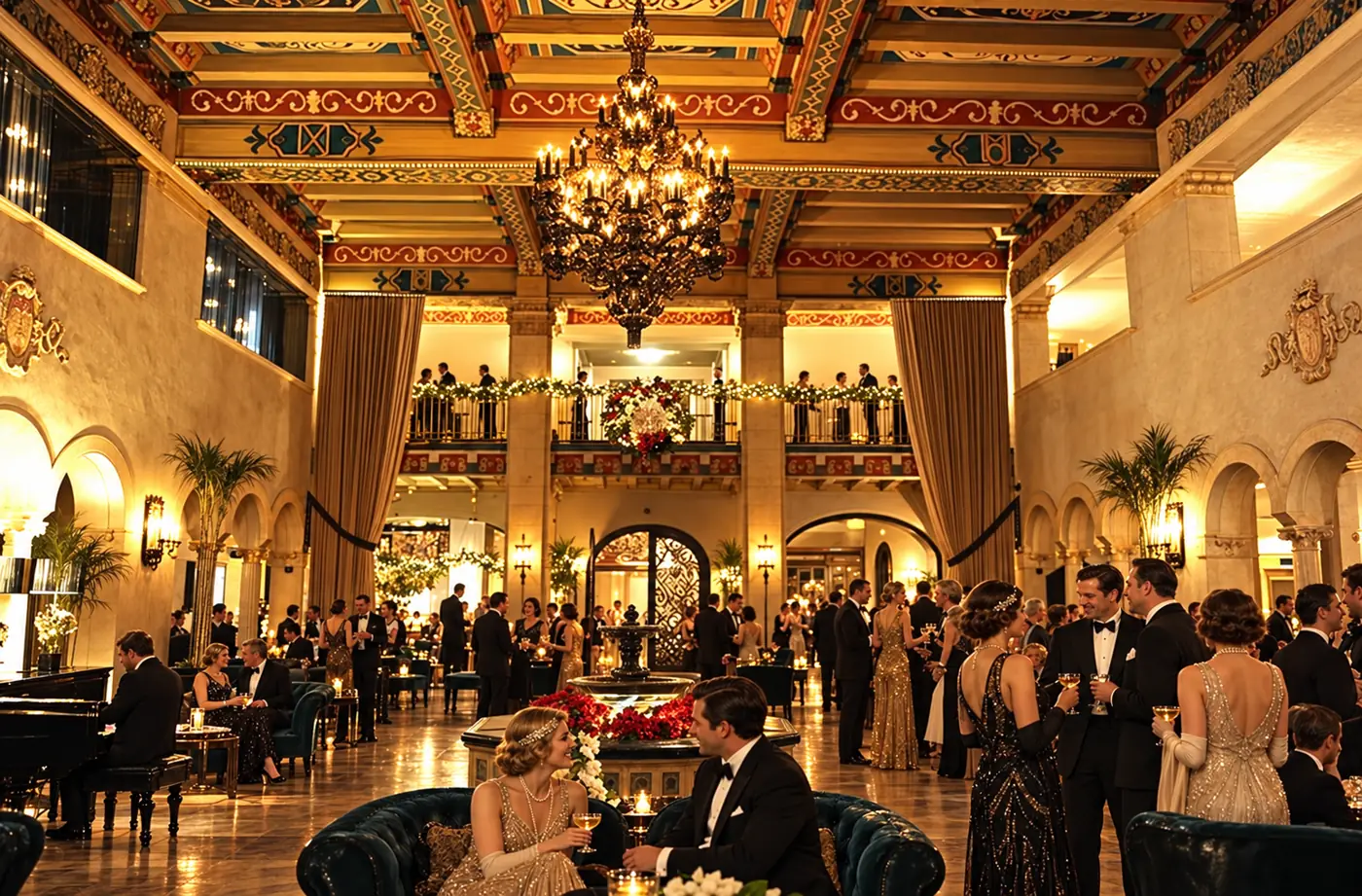
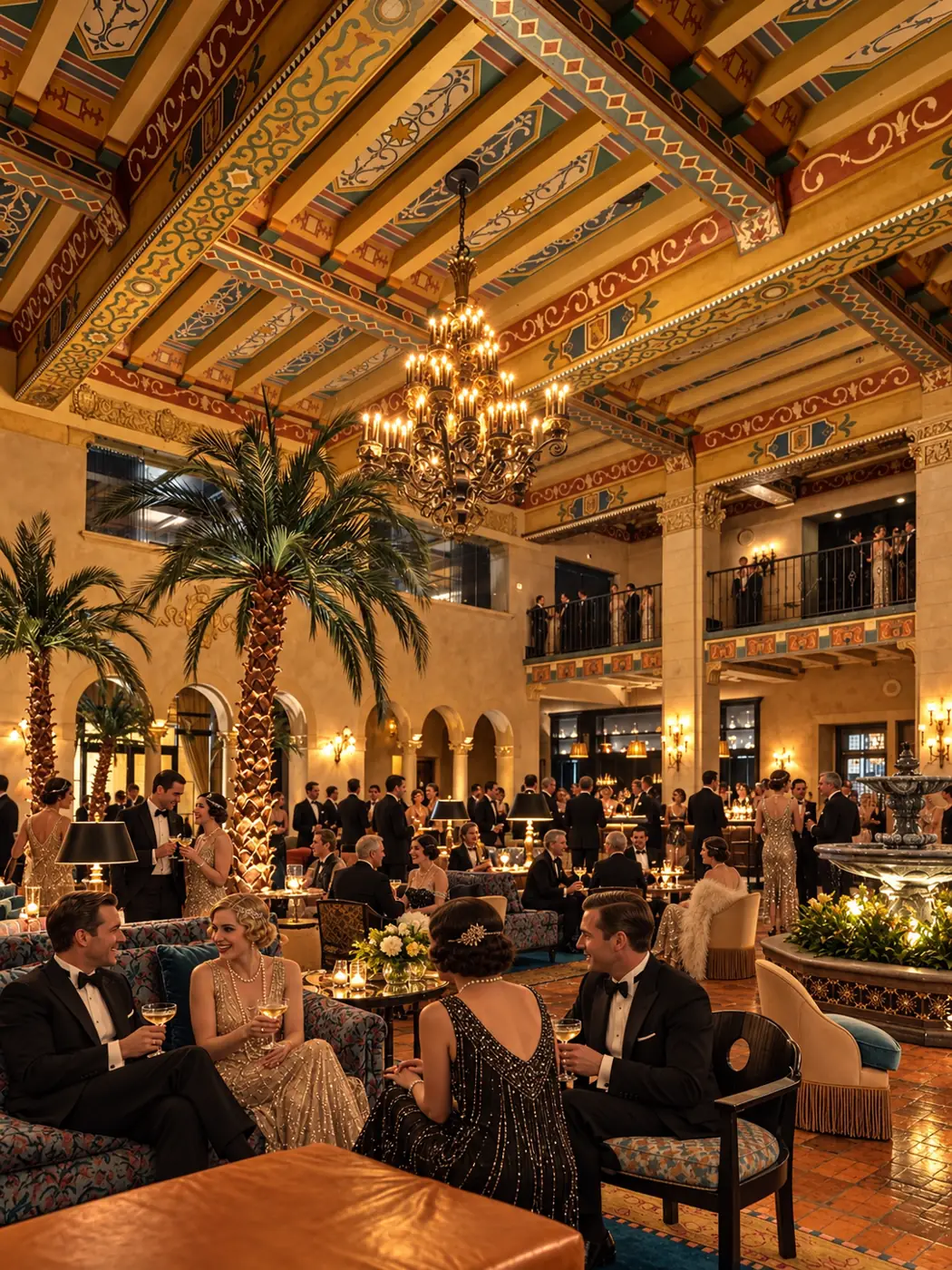
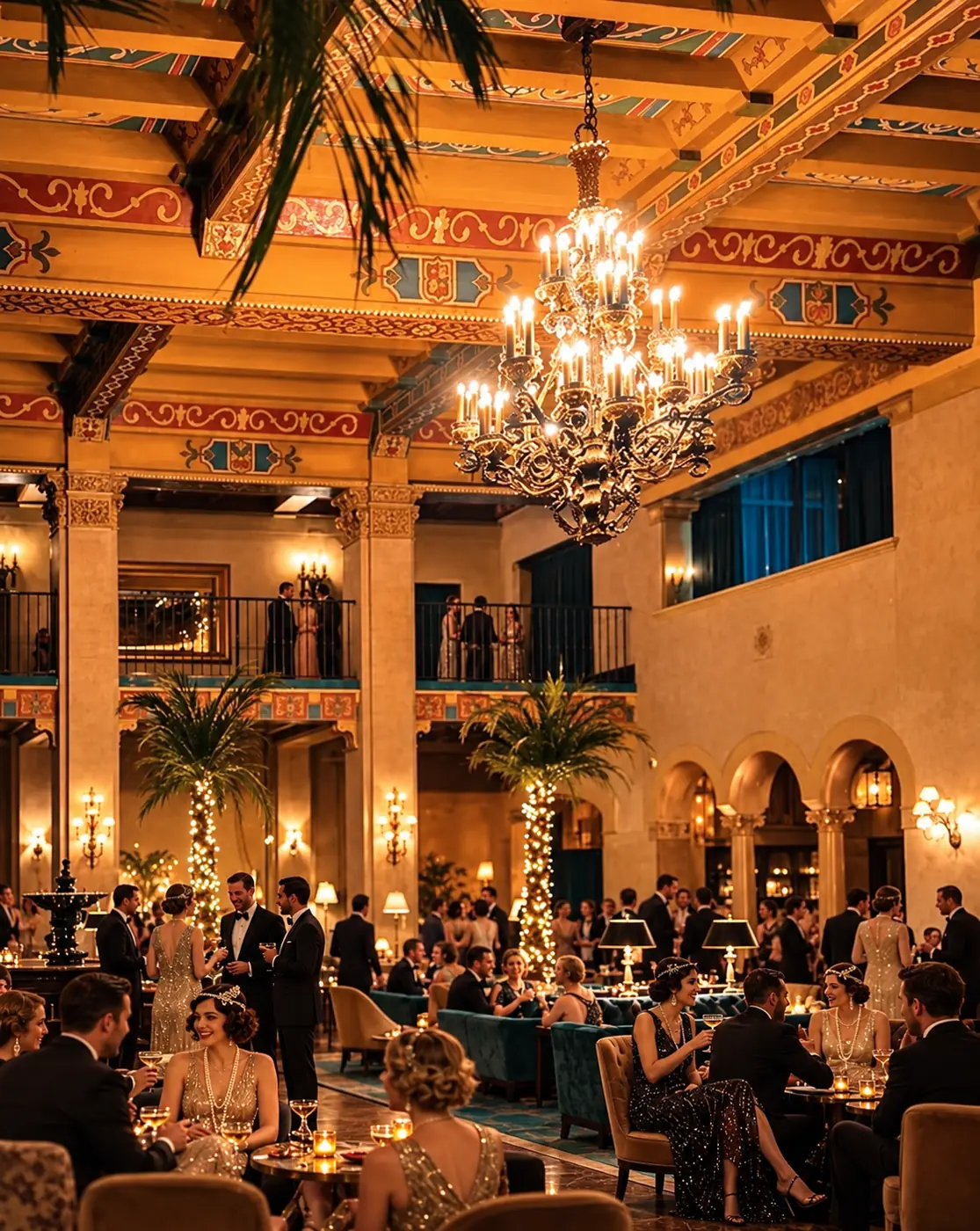
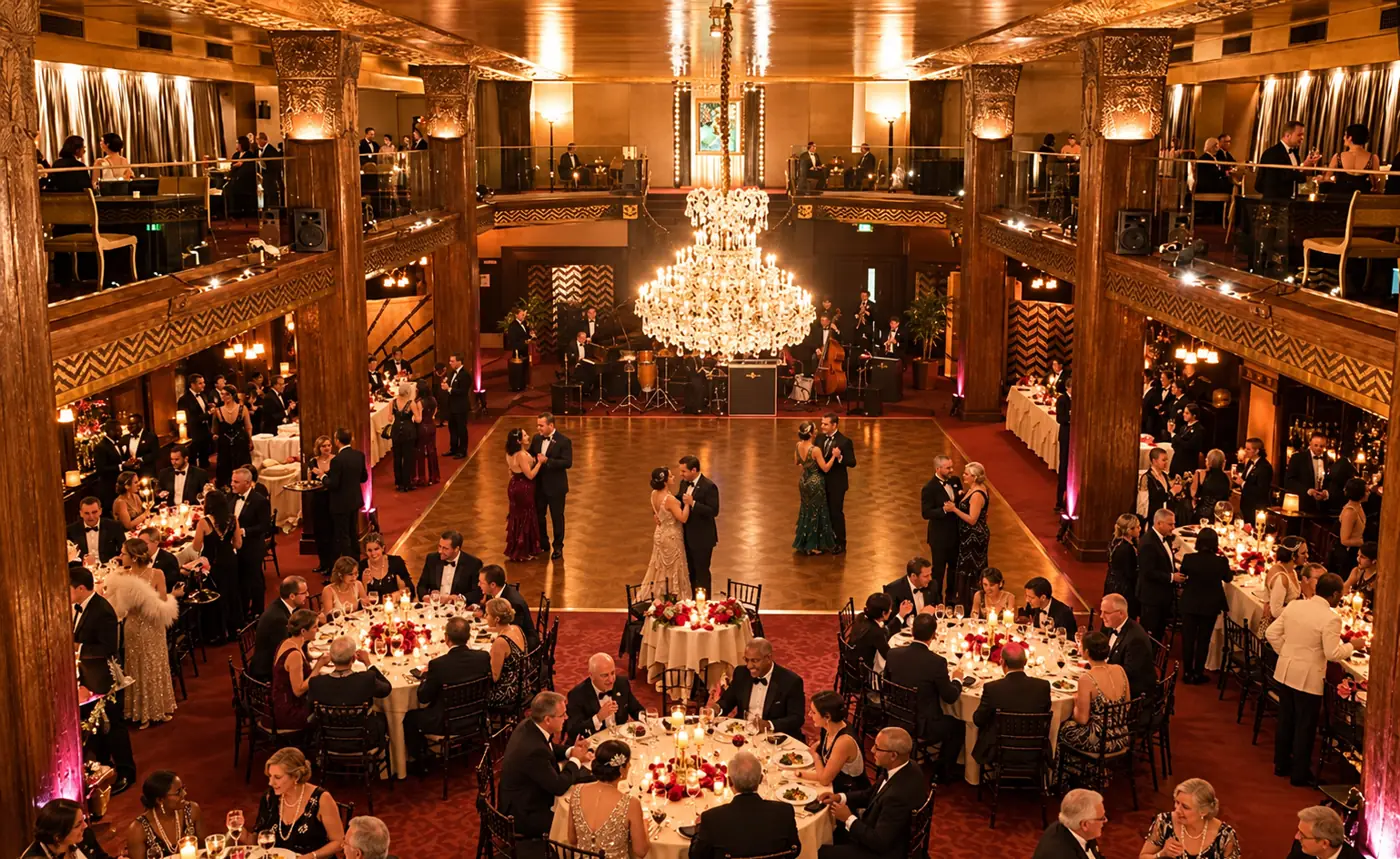
A gala evening for the centenary of Fritz Lang's film. Berlin 1927, staged for Hollywood.
Curated dinnerLive opera & pianoExhibition
Presented by Jackson Chong & Taste2Mind
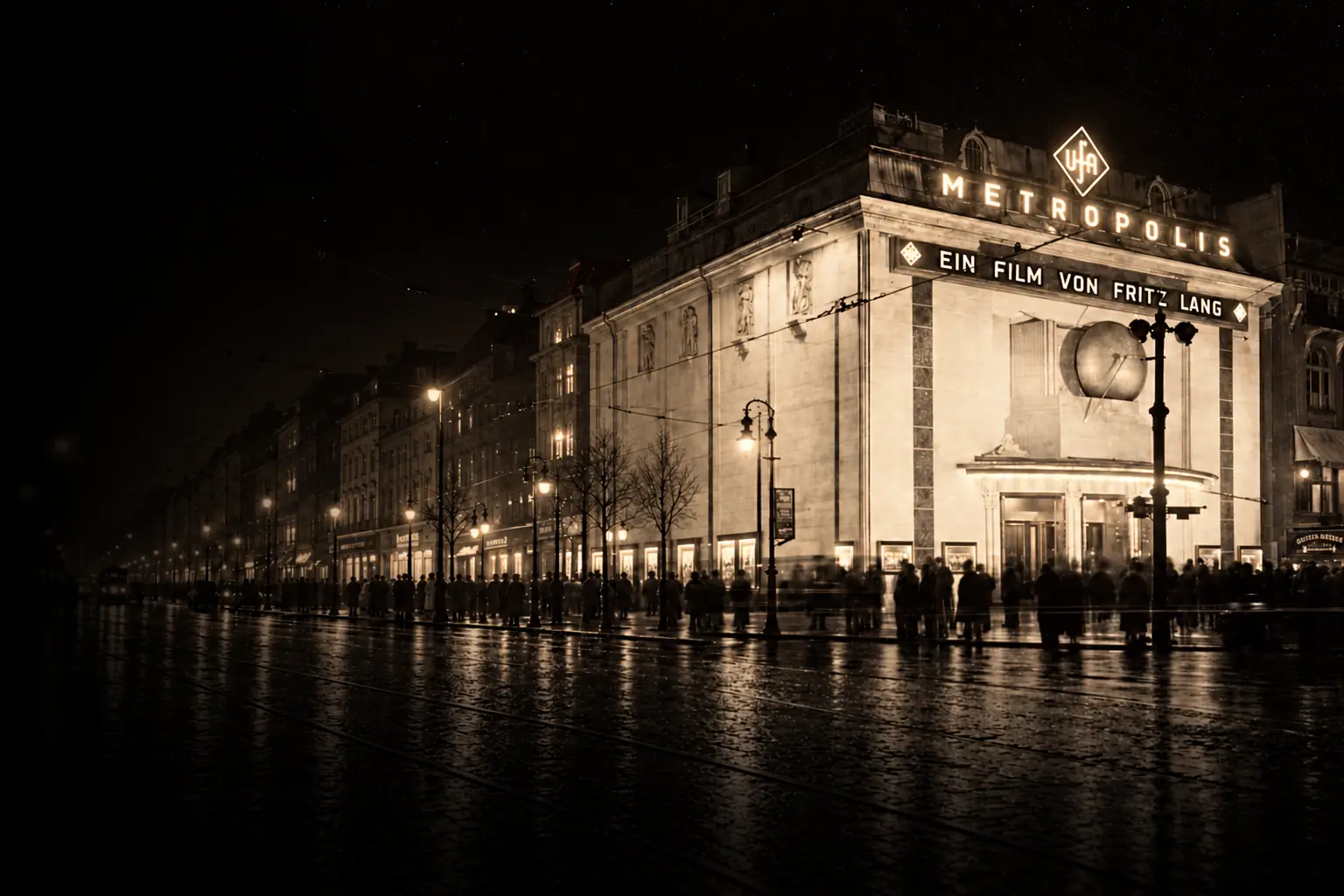
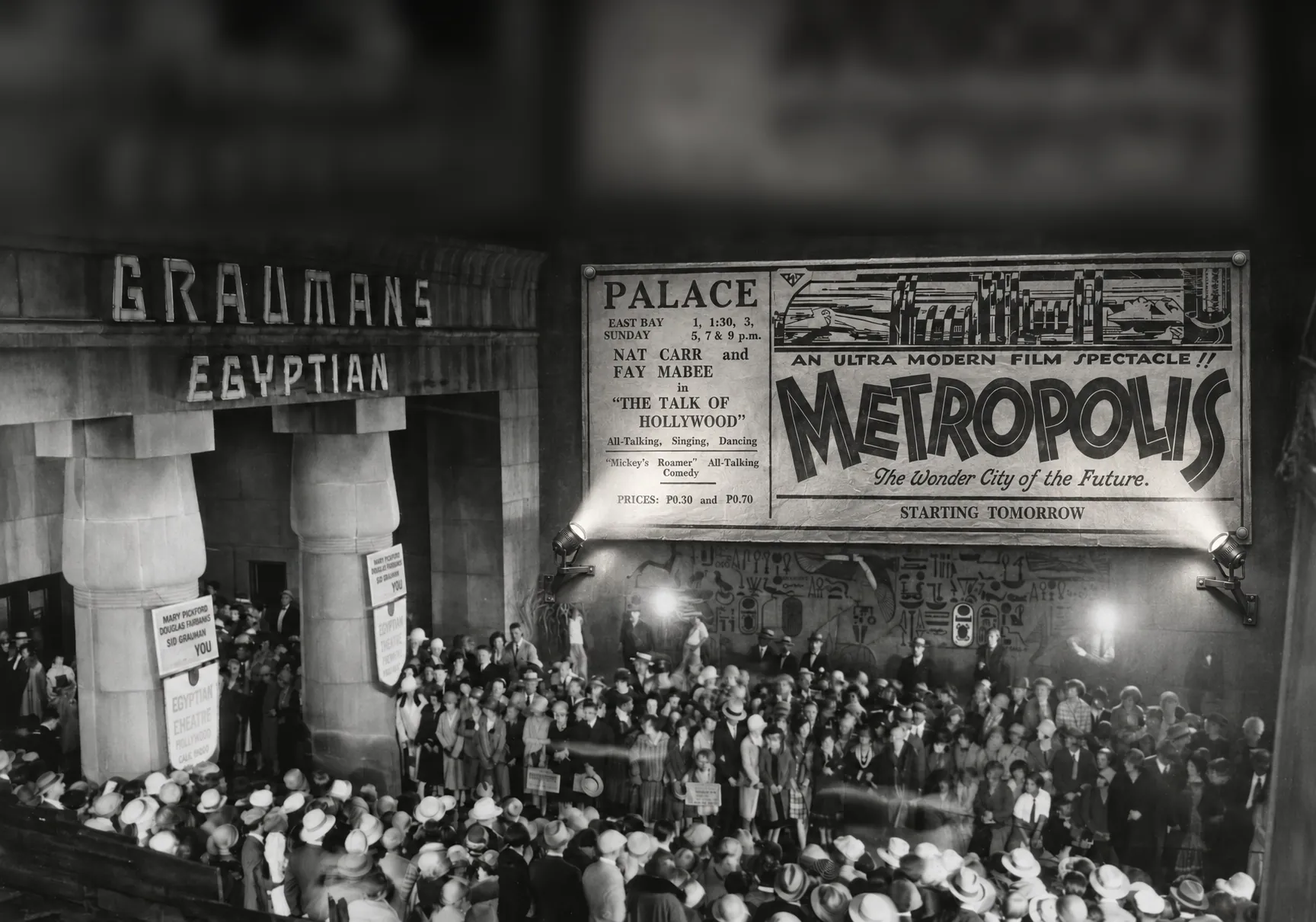
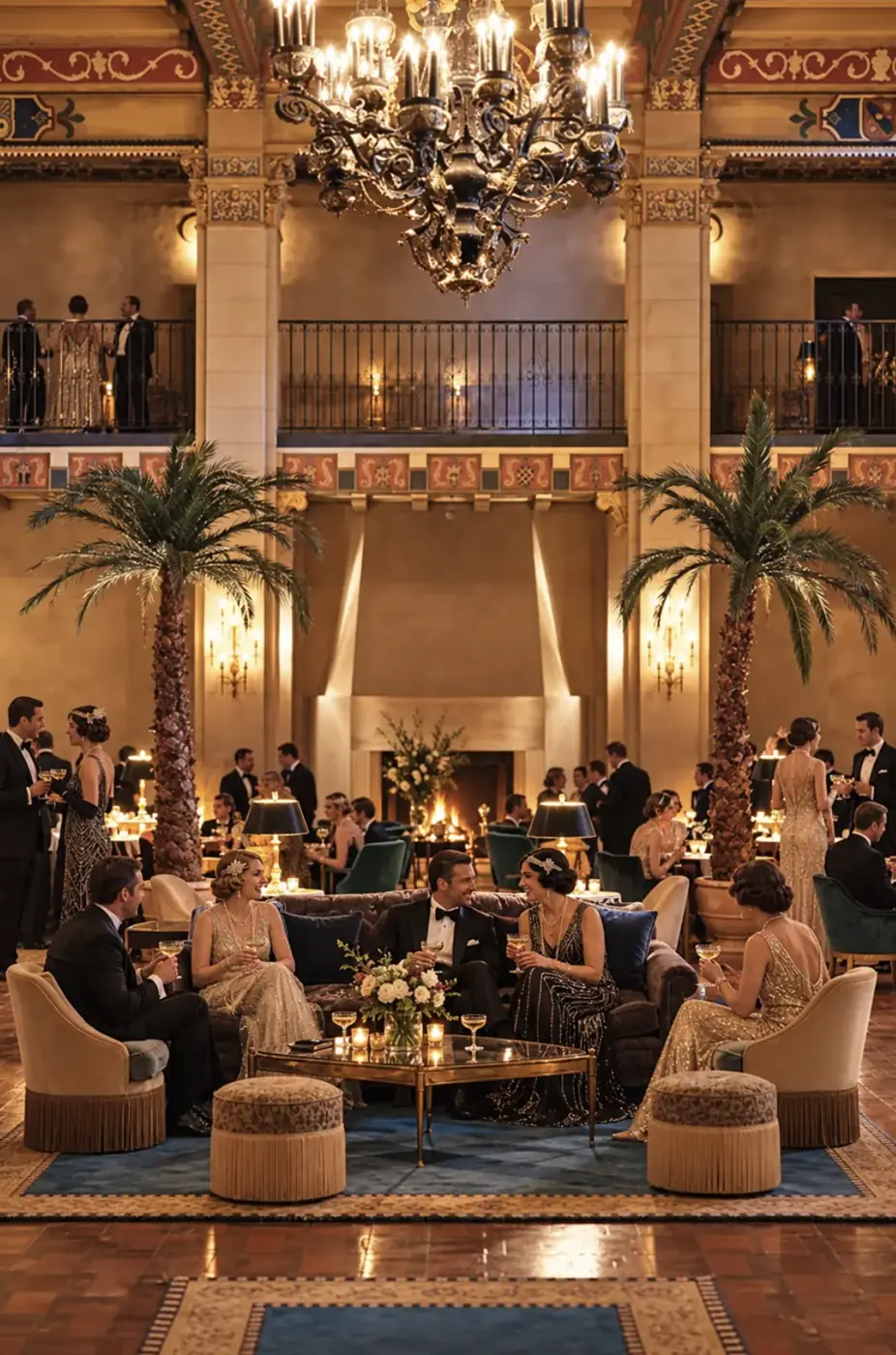
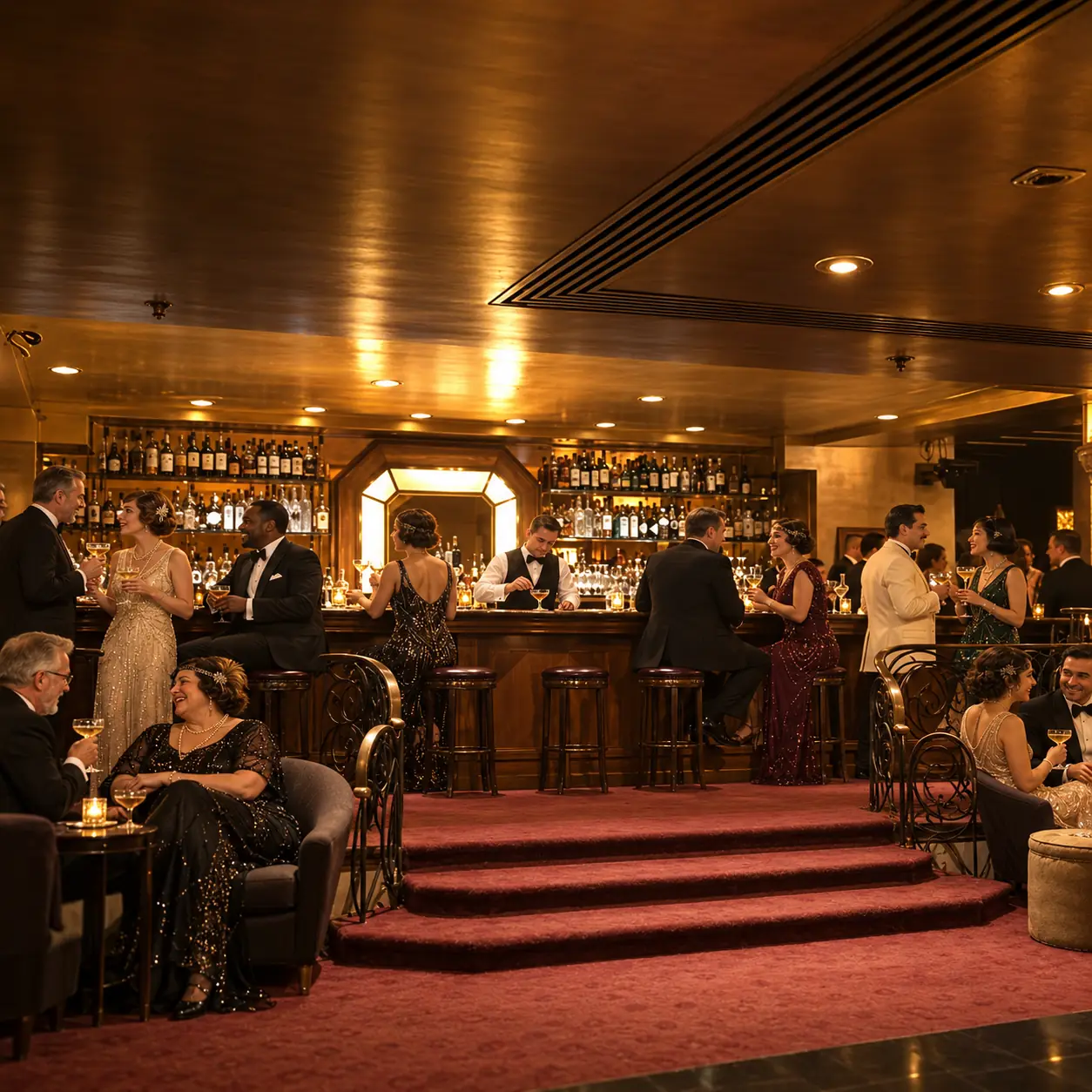
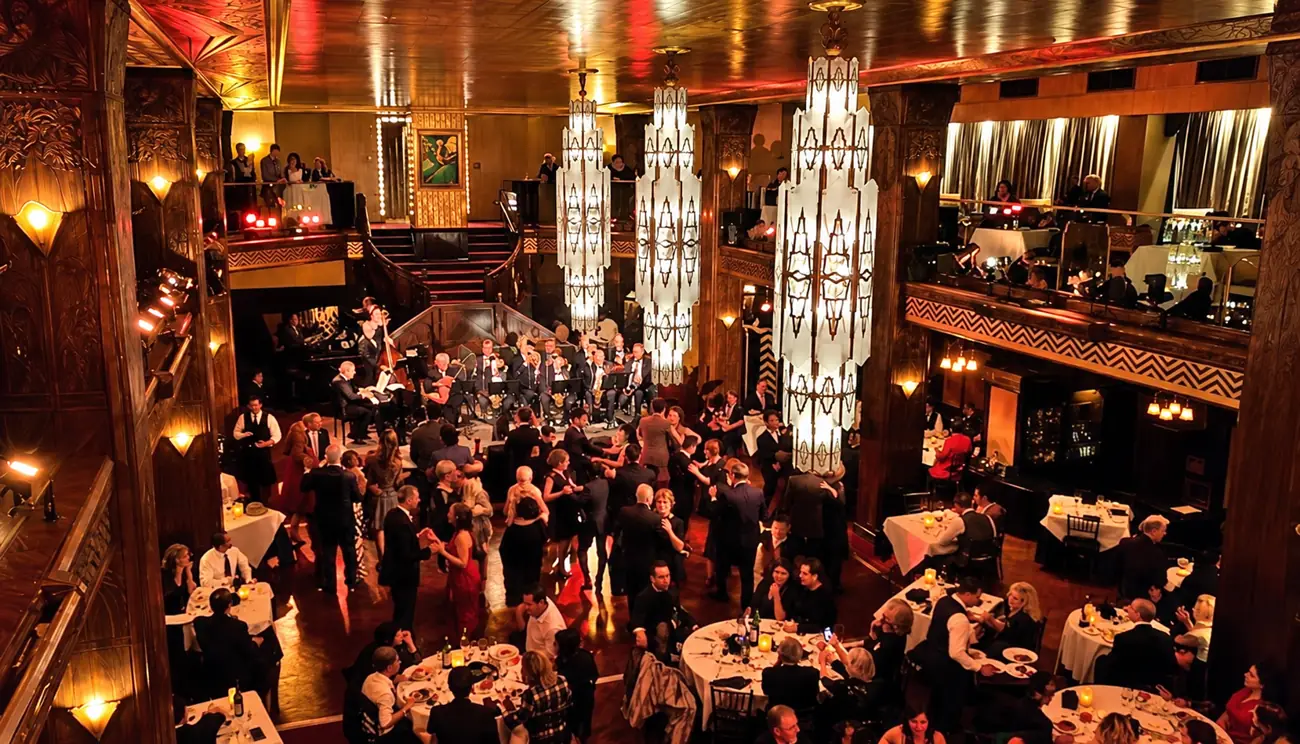
Premiere night, Berlin 1927 Visualisation
The idea
One century after the premiere, Metropolis comes home to the film capital.
Metropolis premiered in Berlin on 10 January 1927 and reached America two months later. Fritz Lang found its skyline in New York. A hundred years on, we bring the film back to the city that made cinema an industry.
The evening joins three things Berlin did best in the twenties: grand-hotel cuisine, the concert stage and design. It opens the run-up to the Academy's own centennial in March 2028, and since 2023 the original film is in the US public domain, so the evening can show it freely.
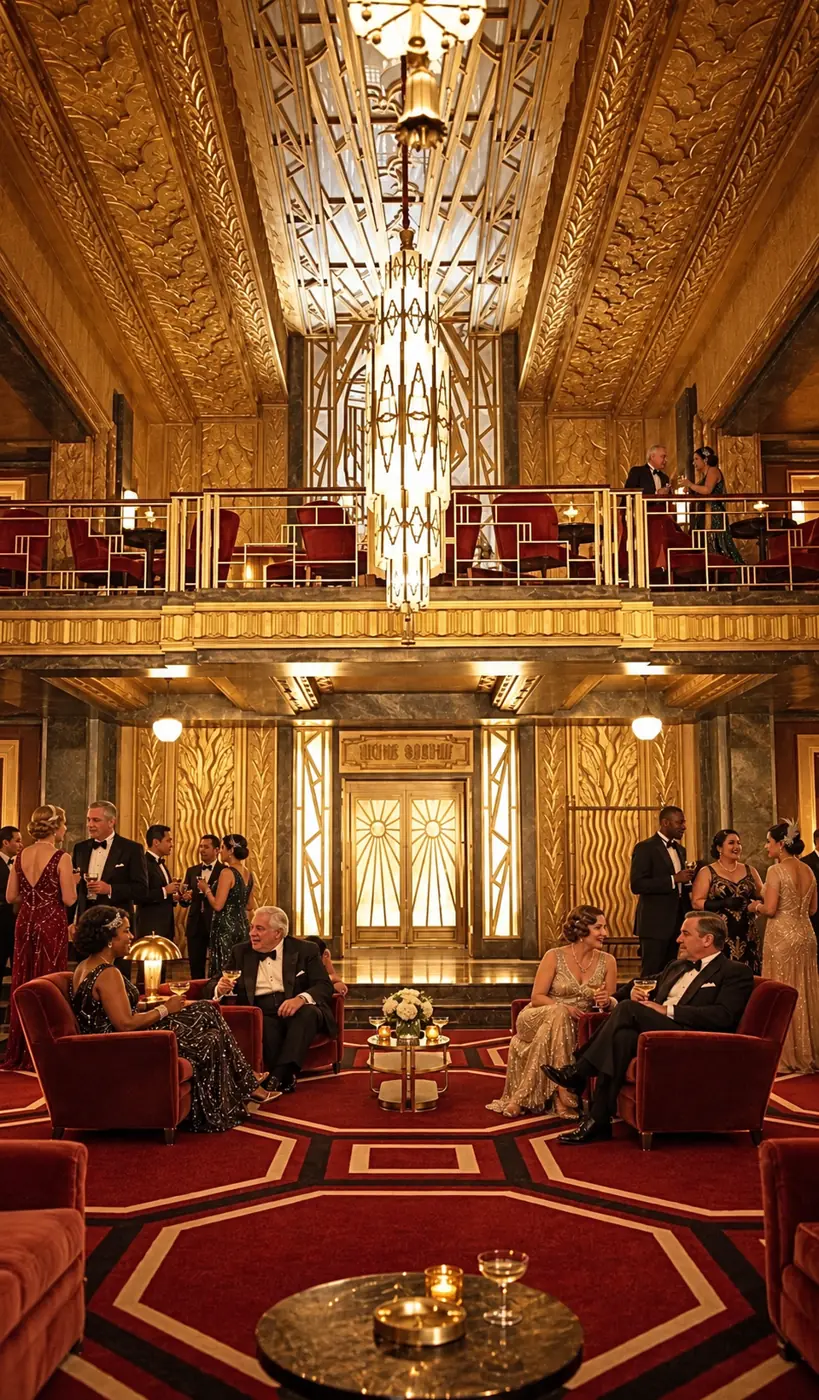
Premiere night, Berlin 1927 Visualisation
Why Los Angeles, why now
US premiere of Metropolis: March 1927. The centenary falls in spring 2027.
The Academy turns 100 on 5 March 2028. This evening, in April 2027, is the European prelude to that Oscar season.
Metropolis entered the US public domain on 1 January 2023.
What makes it more than a dinner
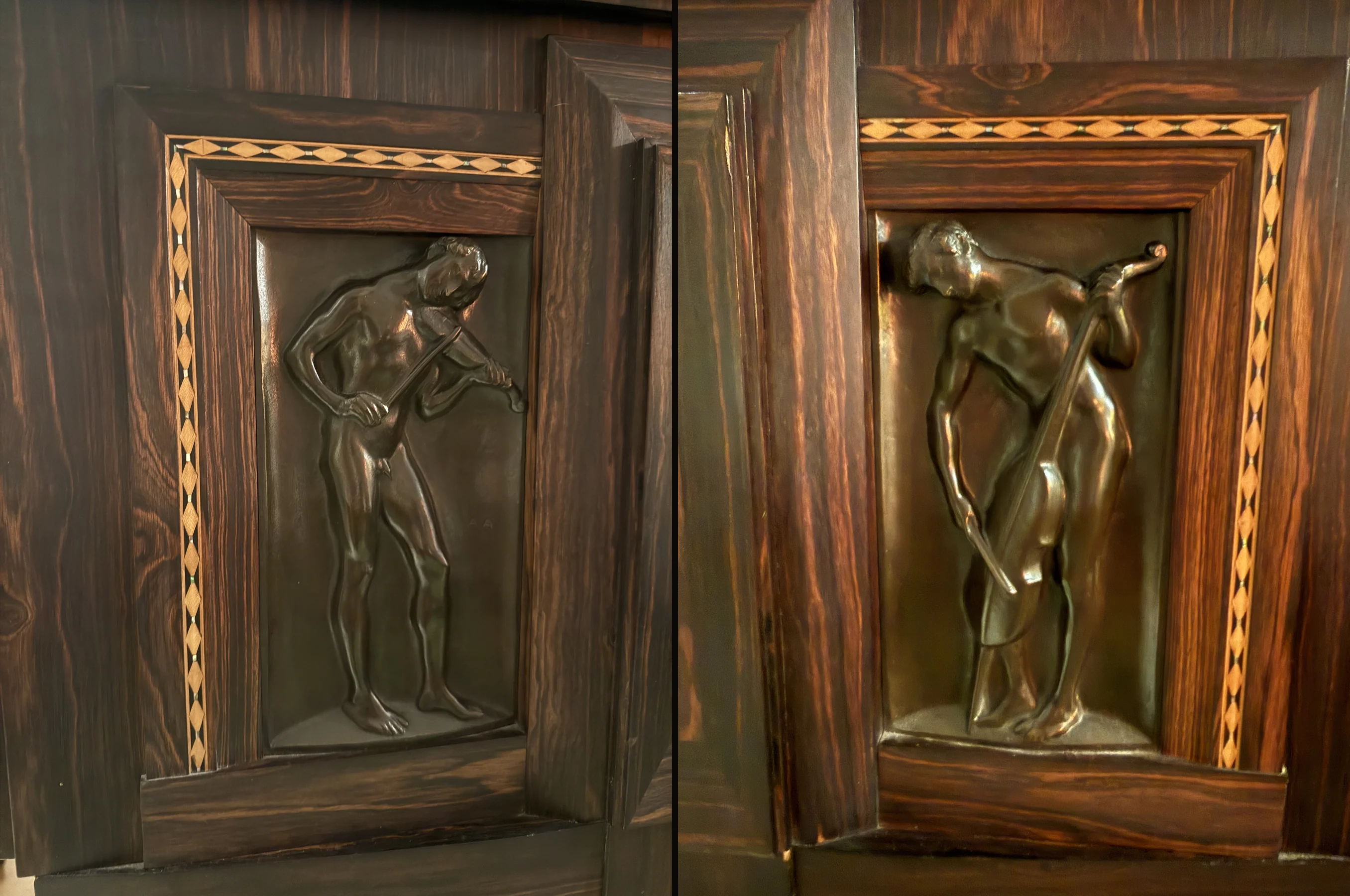
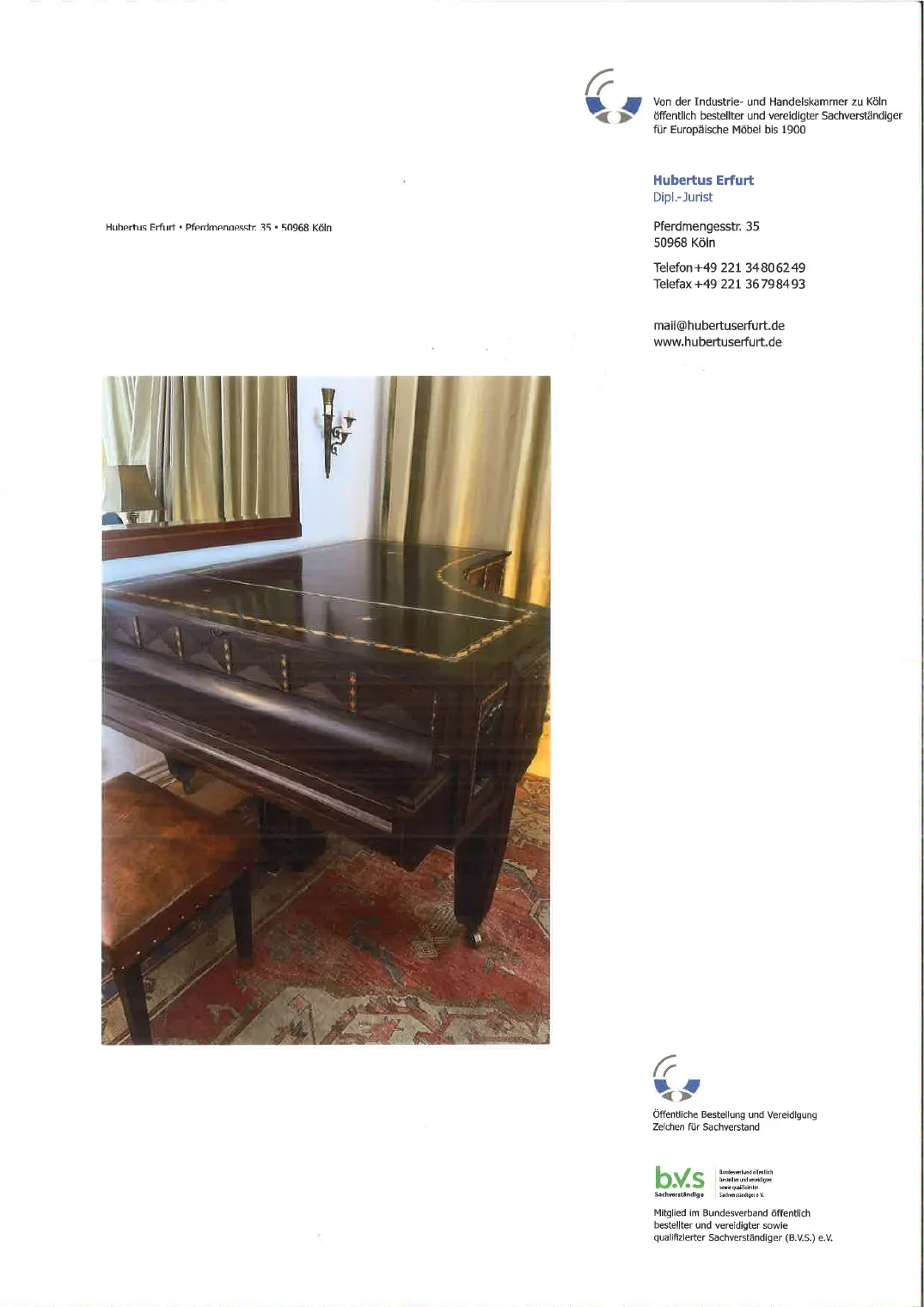
A museum-grade 1908 grand piano, once exhibited on Darmstadt's Mathildenhöhe, at the centre of the room, played live and auctioned for charity that night.
Original film-architecture drawings of the 1920s on the walls.
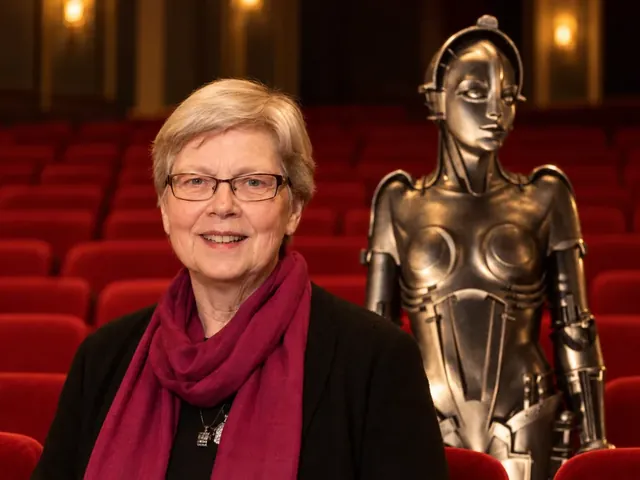
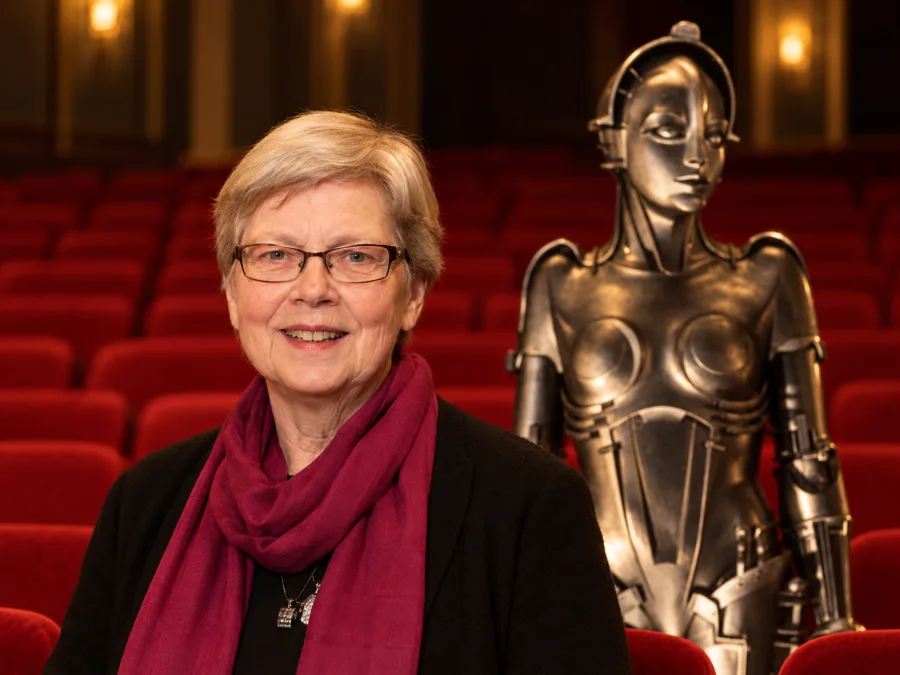
Two guests of honour from the families behind the film's images: Prof. Alexander Luckow and Bertina Schulze-Mittendorff.
Opera from the composers who carried Berlin to Hollywood and Broadway.
Proposed date
April 2027, around the Long Beach Grand Prix weekend, framed as "100 years of Metropolis in America" and as the prelude to the 2028 Oscar season, the Academy's 100th. Exact day to be agreed with Jackson.
1927World premiere, Berlin, 10 January
150–200Guests at round tables of eight (estimate)
1908The Ibach grand piano at the centre of the room
2028The Oscars turn 100. This April 2027 evening opens the run-up
The evening: how the night unfolds
The evening Los Angeles · April 2027
How the night unfolds
One room, one night, seven moments. Courses and music interlock, so the room never waits for the stage. Step inside, or simply scroll on.
01 · Arrival
Huppertz at the Ibach
The night opens as an exhibition: original exhibits from the film, a replica of the Machine-Man, and the set drawings Prof. Luckow's grandfather Robert Herlth made for Fritz Lang. Meanwhile the pianist plays themes from Gottfried Huppertz's 1927 score at the Ibach.The night opens as an exhibition: film originals, a Machine-Man replica and Robert Herlth's set drawings for Fritz Lang.
Reference recording
02 · The Menu
Six courses from the grand salons
A six-course menu in the finest German manner, as the luxury salons of the twenties served it. It opens with the Caviatur: every plate lands as the piano strikes its first chord.Six courses in the finest German manner of the twenties' luxury salons.
Wine
With the Caviatur: Riesling Sekt or Champagne
Through the courses: Pinot Gris and Pinot Noir from Baden
Draft pairing, to be set with the chef.
03 · Keynotes
Two voices from the families of Metropolis
Prof. Alexander Luckow on the film architecture of the twenties, Bertina Schulze-Mittendorff on how her father built the Machine-Man. About ten minutes each, at the piano, between courses.Two short talks at the piano, between courses.
04 · Live Performances
Courses and arias
Wolfgang Rauch sings between two courses, from Korngold to Weill, with piano solos of the period in between.Arias between the courses, from Korngold to Weill.
Reference recordings
05 · Climax
Das Rheingold, with full orchestra
All night only the piano. Then the full orchestra joins Wolfgang Rauch for Wotan's "Abendlich strahlt der Sonne Auge" from Das Rheingold, with the film's strongest scene on the wall, in sync. The last bars of the opera, the gods' entry into Valhalla, bring it to a crowning close.Then the full orchestra: Wolfgang Rauch sings Wotan's "Abendlich strahlt der Sonne Auge", and the last bars of Das Rheingold crown the night.
Reference recordings
06 · Auction
The Ibach goes under the hammer
A live charity auction of the 1908 Ibach grand. The winning bidder decides: keep the piano, or give it to the Metropolitan Museum of Art.
07 · Encore
My Way
Wolfgang Rauch sings the encore: "My Way", the song Frank Sinatra made America's own, as a German baritone's bow to the host country. Then the night winds down gently: the bar opens, conversations carry on, and there is time for photos with the artists and guests of honour.Wolfgang Rauch sings "My Way" as a bow to America. Then the bar opens, talk goes on, photos are taken.
Strategic partnerEthical goose liver from Germany, to EU standards and in line with California law.Ethical goose liver, EU and California compliant.
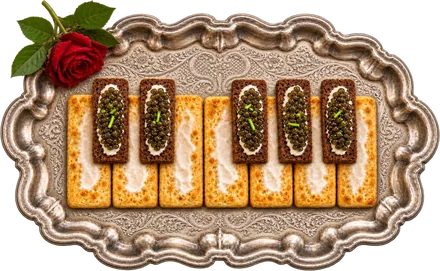
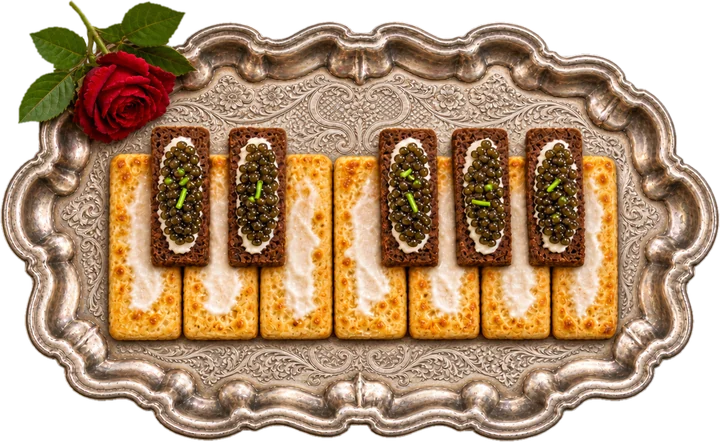
Course 1CaviaturOne octave per guest: white keys of potato blini, black keys of pumpernickel with caviar and crème fraîche
Keynote · Film architecture
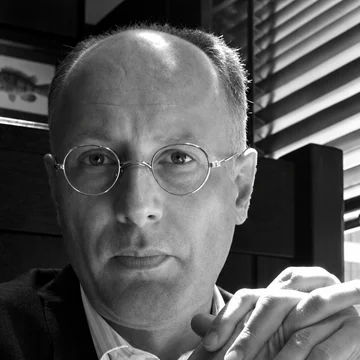
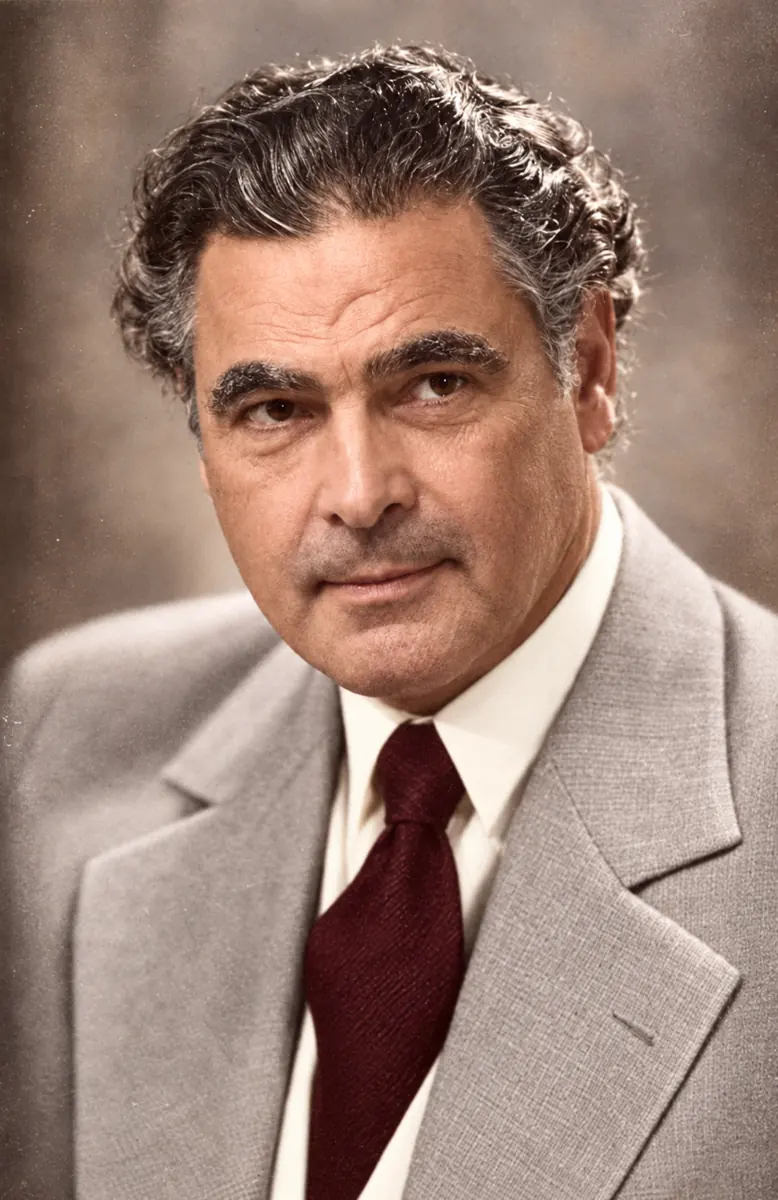
Prof. Alexander Luckow
Grandson of Robert Herlth, film architect for Fritz Lang and F. W. Murnau.
Grandson of Robert Herlth, set designer for Fritz Lang and F. W. Murnau. Professor of media design. His grandfather's drawings hang in the room.
Bio
KeynoteBuilding the dream: film architecture from Babelsberg to Hollywood
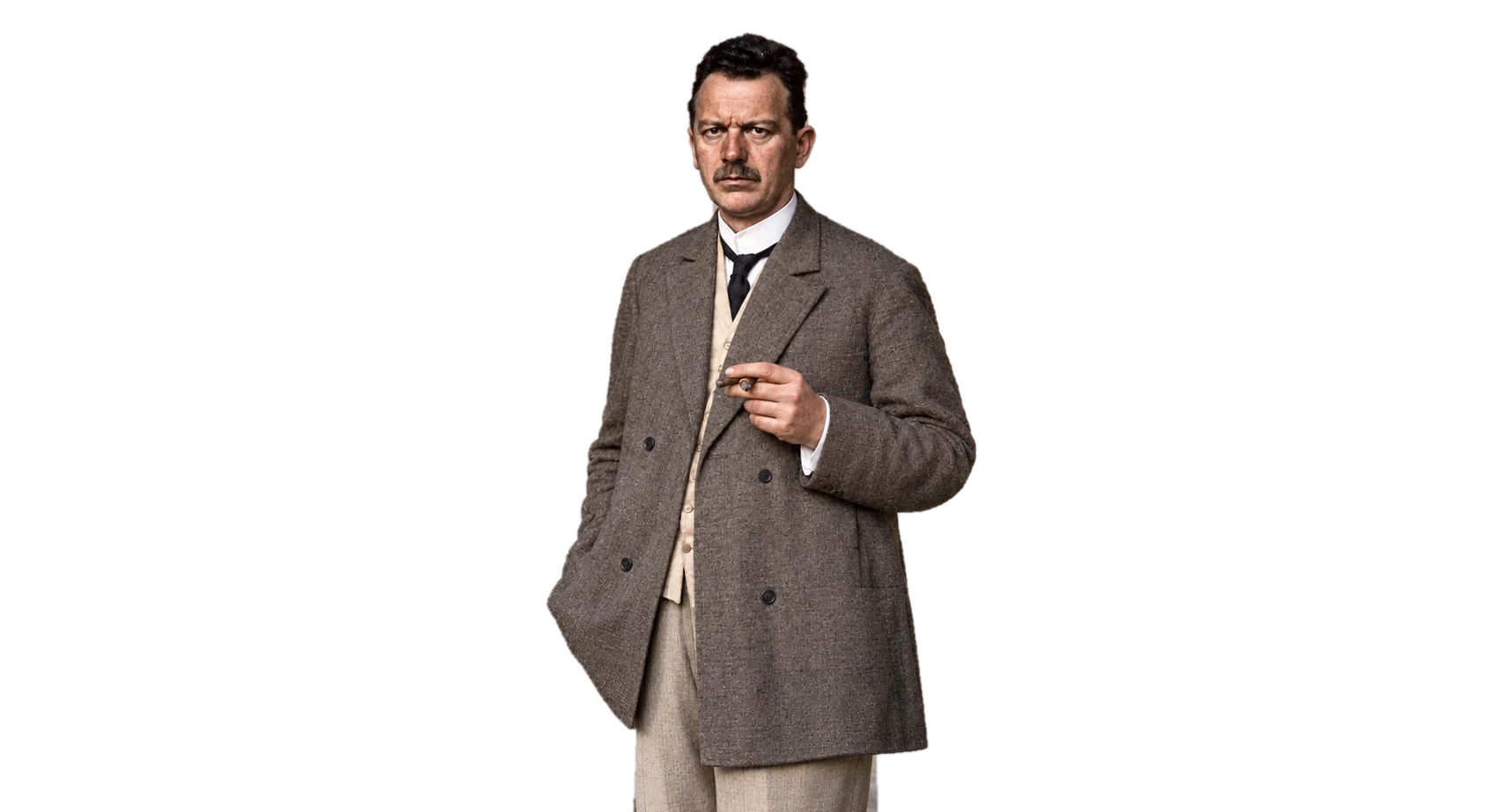
Professor of Media and Communication Design at Macromedia University of Applied Sciences and a partner of the brand agency cdc | brandcreation. Born in Berlin, he keeps his grandfather's drawings, a rare first-hand record of how the look of German silent film was designed.
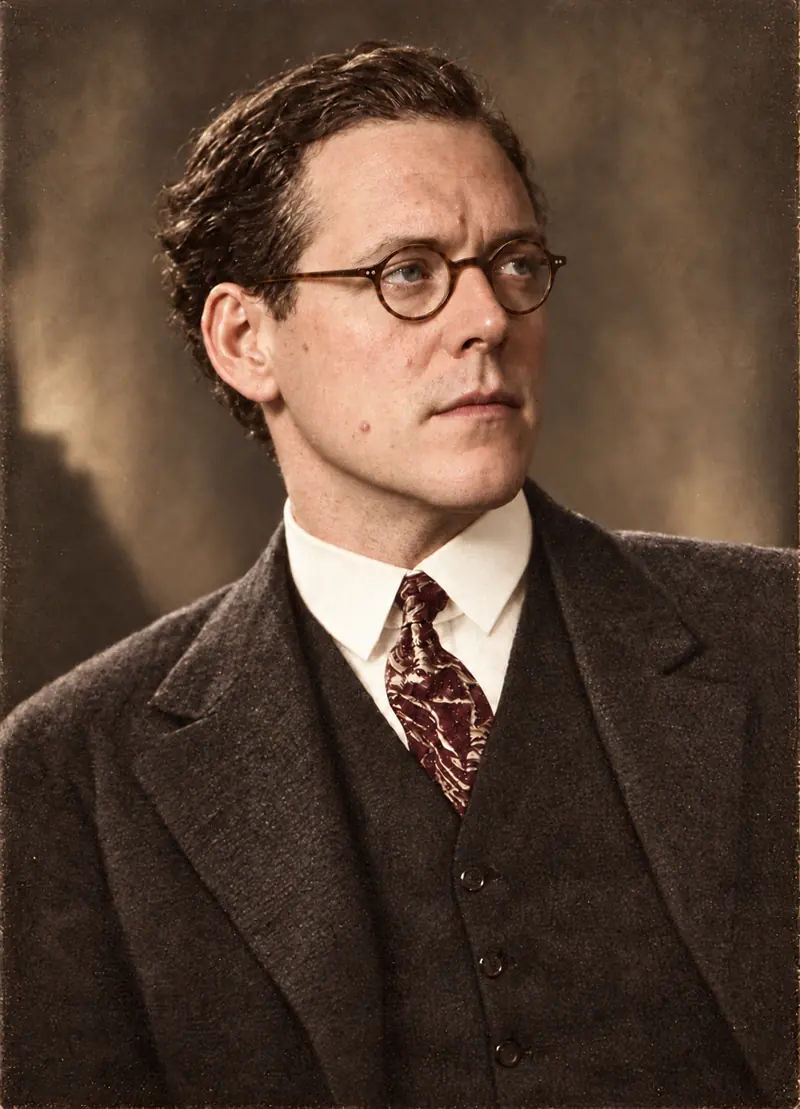
Robert Herlth (1893–1962)
Film architect of more than 160 films
Fritz Lang's Der müde Tod (1921)
F. W. Murnau's Der letzte Mann (1924) and Faust (1926)
Der Kongress tanzt (1931)
On the night: original drawings from the family collection hang on the walls.
Keynote · The Machine-Man
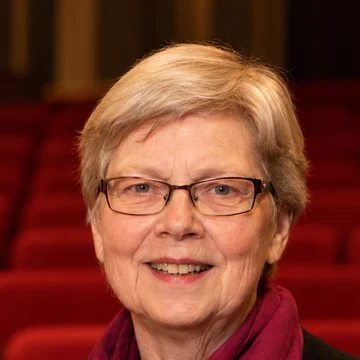
Bertina Schulze-Mittendorff
Daughter of Walter Schulze-Mittendorff, the sculptor who created the Machine-Man.
Daughter of Walter Schulze-Mittendorff, who sculpted the Machine-Man in 1926. She manages his estate.
Bio
KeynoteMaking Maria: the story of the Machine-Man
She manages her father's estate and is the authority on how the most famous robot in film history was made.
Walter Schulze-Mittendorff (1893–1976)
Sculpted the Maschinenmensch in 1926, from a body cast of Brigitte Helm and a new material called plastic wood
Also created the figures of Death and the Seven Deadly Sins for the film
A 1970 replica, commissioned by Lotte Eisner, stands in the Cinémathèque française in Paris
On the night: guest of honour at the host's table.
Composite
Voice · Artistic direction
Wolfgang Rauch
German dramatic baritone, from La Scala to the Vienna State Opera.
Voice samples · Wolfgang Rauch
German dramatic baritone, from La Scala to the Vienna State Opera. He hosts and sings the evening.
Bio
An international career from La Scala to the Vienna State Opera. He hosts and sings the evening and shapes its musical programme. Through Vocal Moments he brings opera into intimate settings.
Korngold and Weill both left Germany for America. The programme follows their road. Sung in German, with one exception at the end.
01 · Arrival
Gottfried Huppertz · Metropolis (1927)
Themes from the original film score, played on the Ibach as the guests arrive.
Reference recording · Silent-film piano accompaniment
04 · Live performances
Korngold · "Mein Sehnen, mein Wähnen"
Pierrot's song from Die tote Stadt, 1920. Korngold later won two Oscars in Hollywood. Sung live by Wolfgang Rauch with piano.
Reference recording · Josef Metternich
04 · Live performances
Weill · "Die Moritat von Mackie Messer"
The Threepenny Opera, Berlin 1928. Sung live by Wolfgang Rauch with piano.
Reference recording · Bryn Terfel
05 · Climax
Wagner · Das Rheingold, with full orchestra
Wotan's "Abendlich strahlt der Sonne Auge", with the film's strongest scene on the wall in sync. The gods' entry into Valhalla crowns the night.
Reference recordings
07 · Encore
"My Way"
The song Frank Sinatra made America's own, sung by a German baritone as a bow to the host country.
Reference recording · Frank Sinatra, 2008 remaster
The voice of the night
Wolfgang Rauch · voice samples
The baritone who hosts and sings the evening, in his own recordings: Scarpia from Tosca and Escamillo from Carmen.
Voice samples · Wolfgang Rauch
Why Wagner fits Metropolis
Huppertz wrote a large, leitmotif-driven score in the manner of Wagner, the grandfather of film music. For an American audience that sound means one thing: the movies.
Sound and staging
Discreet amplification for piano and voice at 150–200 guests
Orchestral playback for the Rheingold climax, mixed live with the stage
Pianist plays period solo pieces between the songs
Rights
Huppertz's score played live from the notes is free to perform in the US. Existing orchestral recordings and the restored film versions carry their own rights and are not needed.
The table
Six courses from the grand salons
A six-course menu in the finest German manner, as the luxury salons of the twenties served it. It opens with the Caviatur: every plate lands as the piano strikes its first chord. Draft menu, to be refined with the guest chef.
Menu · Draft
Amuse-boucheCaviaturOne octave per guest: crisp white keys of potato blini, black keys of pumpernickel with caviar and crème fraîche
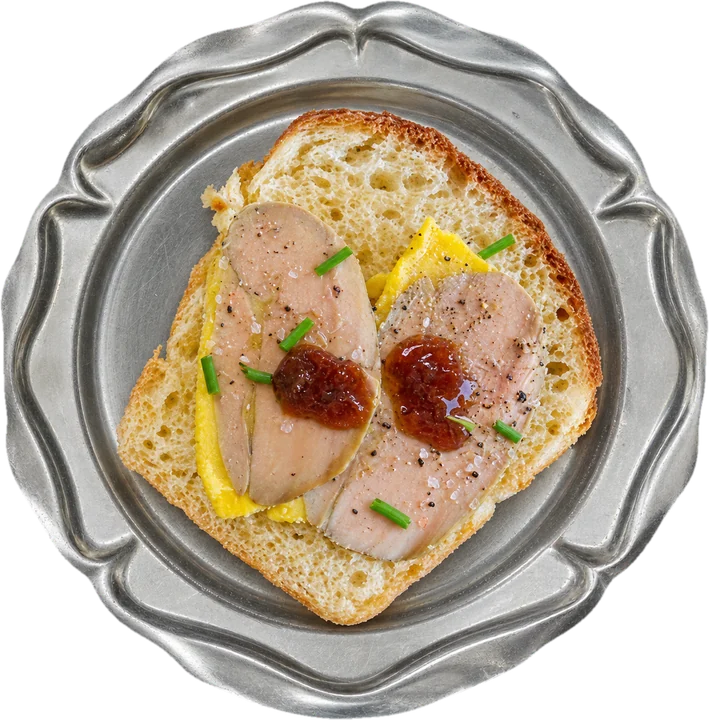
StarterGoose liver terrineOn toasted brioche with Pinot Noir jelly and chives. Made without force-feeding. Alternative: lobster medallion
SoupConsommé doubleClear and golden, with Madeira and a julienne of root vegetables, a nod to the turtle soup of the era
FishDover soleBeurre blanc, celeriac purée, cress and pearls of trout roe
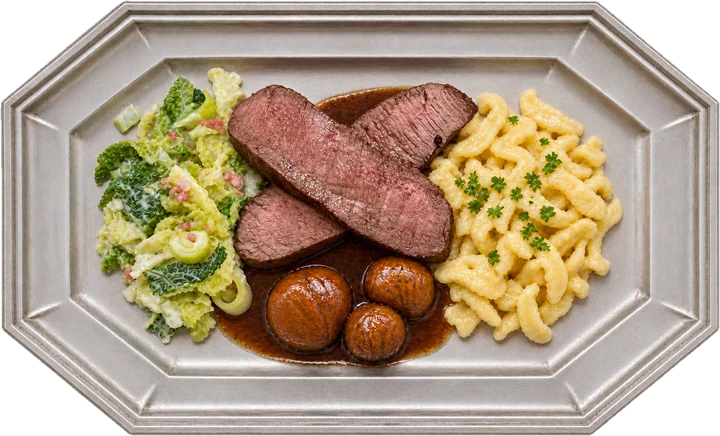
MainSaddle of venisonJuniper jus, hand-scraped Spätzle, creamed savoy, glazed chestnuts
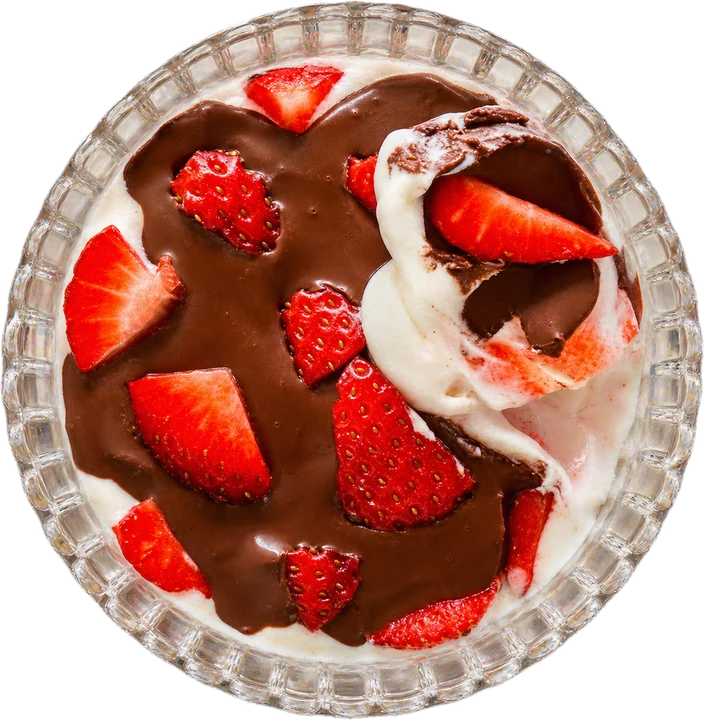
DessertFürst PücklerChocolate, vanilla and strawberry, with a breath of Kirsch
Chef shortlist
Schwarzwaldstube, Traube Tonbach, Baiersbronn. Three Michelin stars.
Restaurant Bareiss, Baiersbronn. Three Michelin stars.
Ammolite, Europa-Park, Peter Hagen-Wiest. Two stars, at home with show and staging.
None approached yet. Proposed as a guest-chef appearance.
Wine
Riesling Sekt or Champagne with the Caviatur, then Baden Pinot Gris and Pinot Noir.
Season
For an April date, white asparagus with sauce mousseline can replace the soup. Venison and chanterelles depend on the season.
Goose liver in California
Strategic partnerEthical goose liver from Germany, to EU standards and in line with California law.
California bans force-fed foie gras. Happy Foie raises its geese on pasture without force-feeding, so state law does not stand in the way. Import of EU poultry products requires US federal approval, which is being checked. Lobster is the fallback.
The instrument
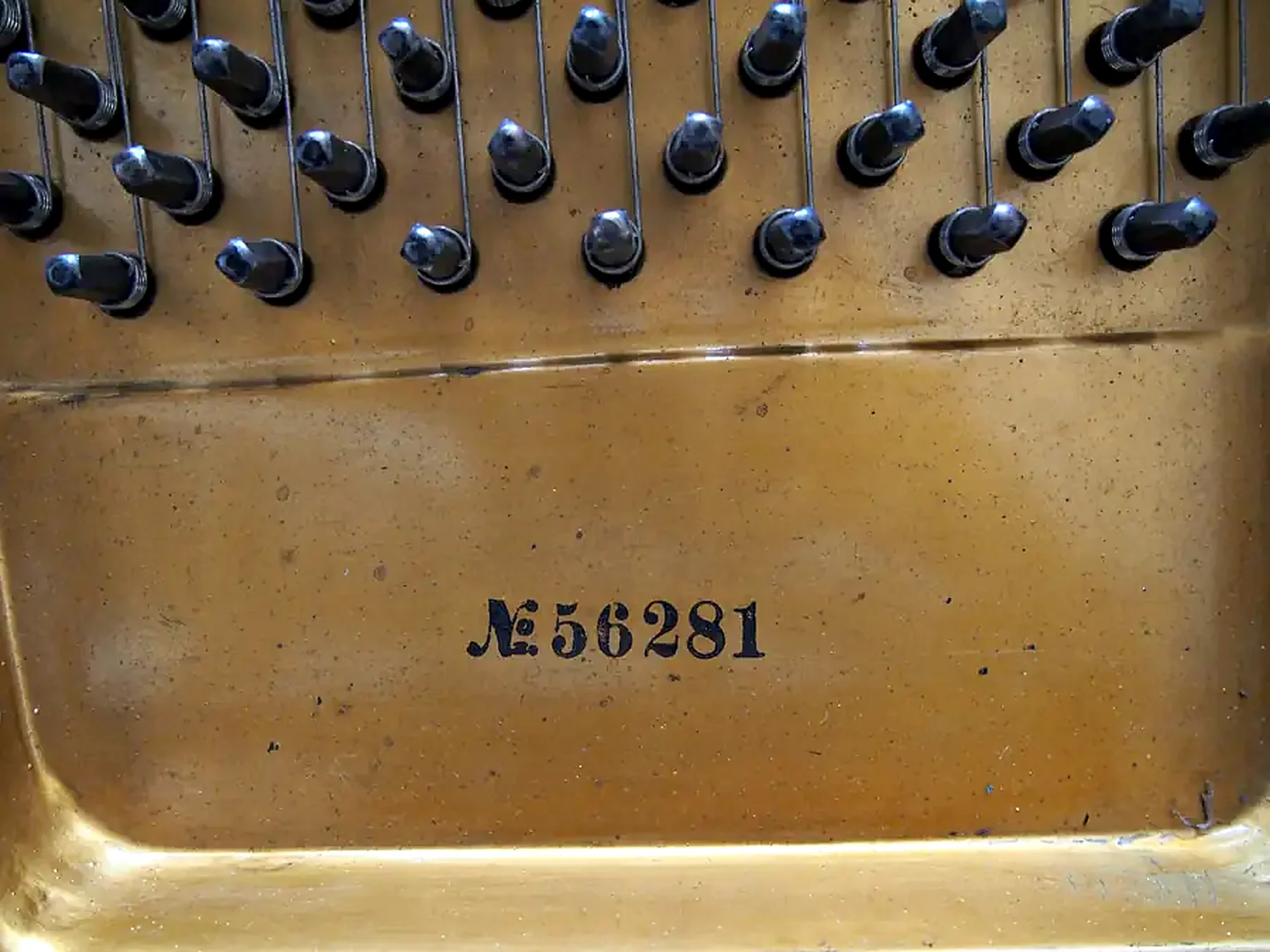
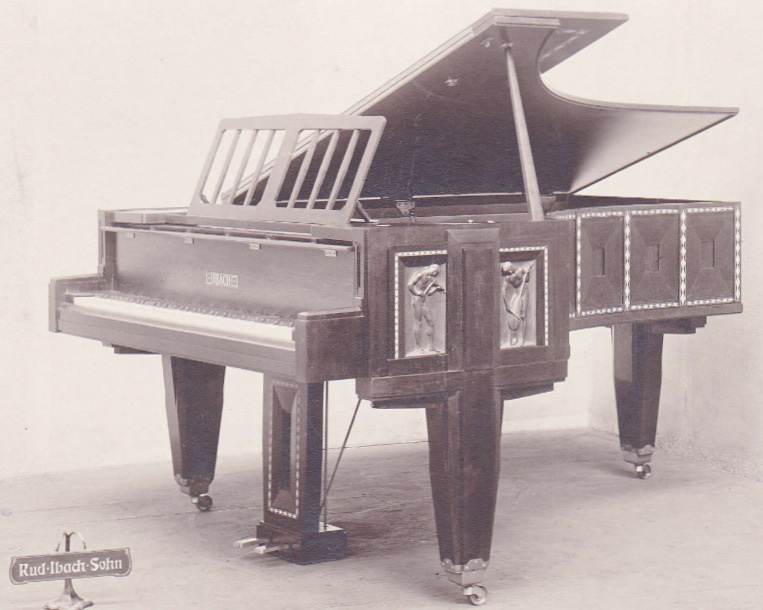
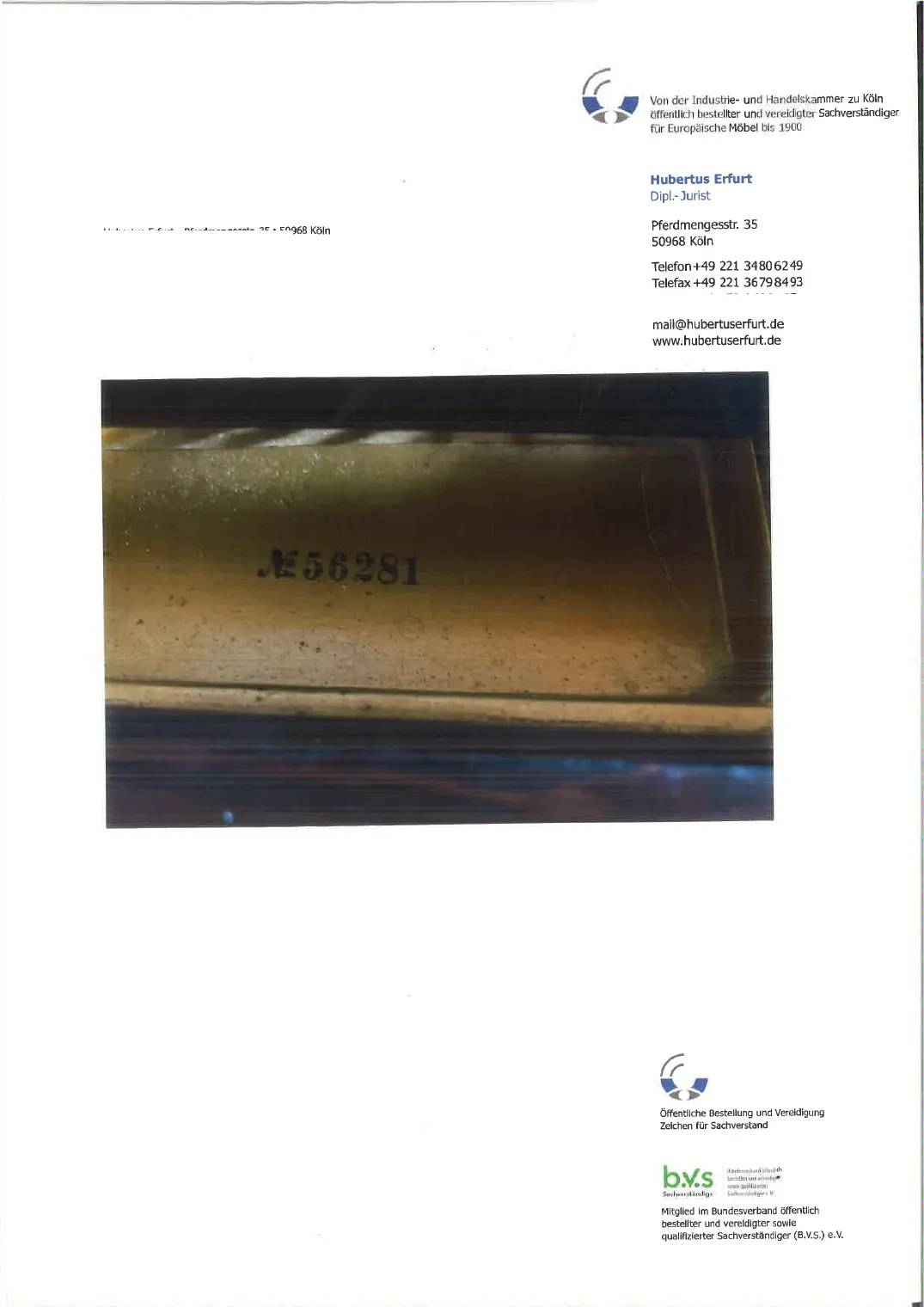
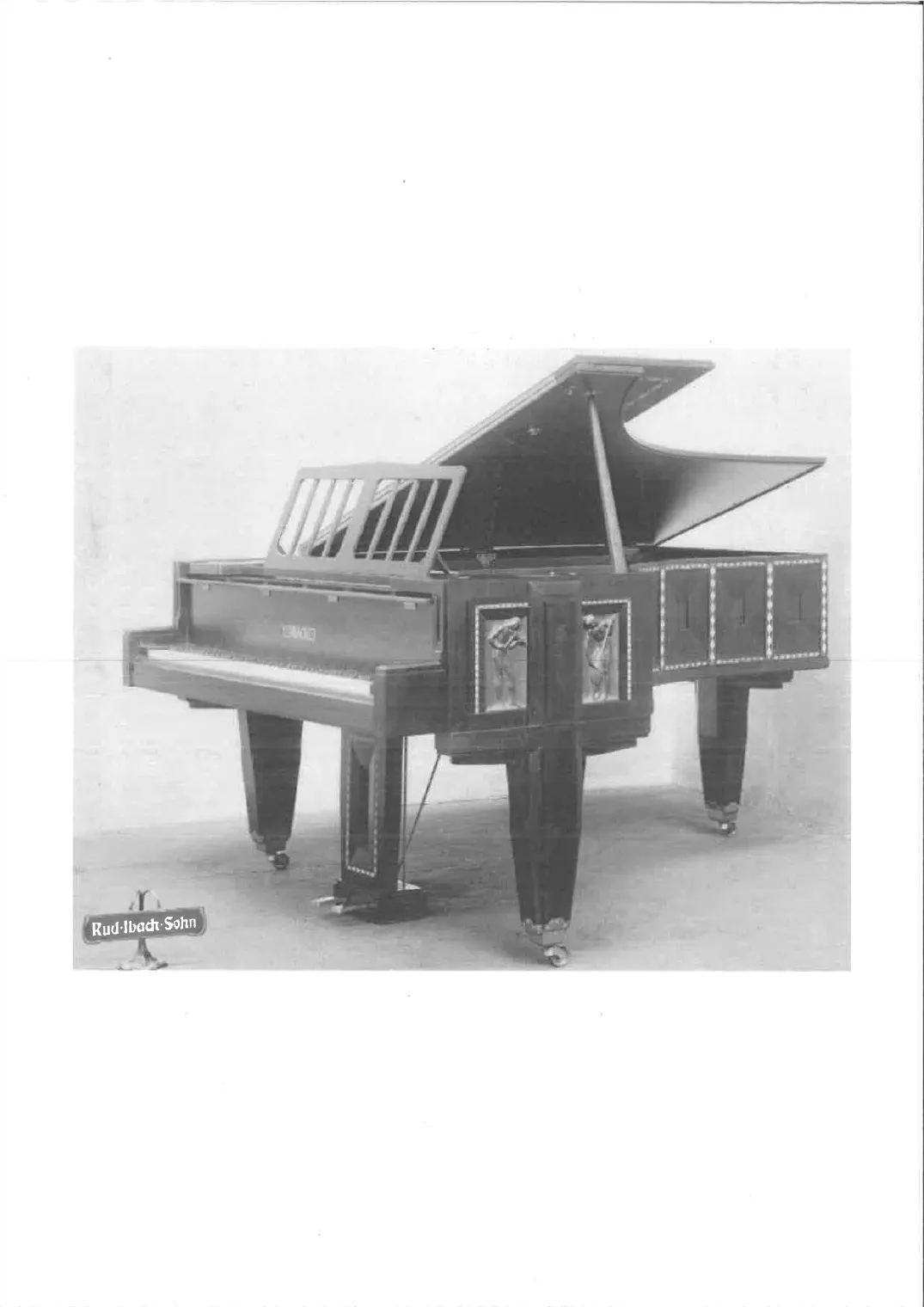
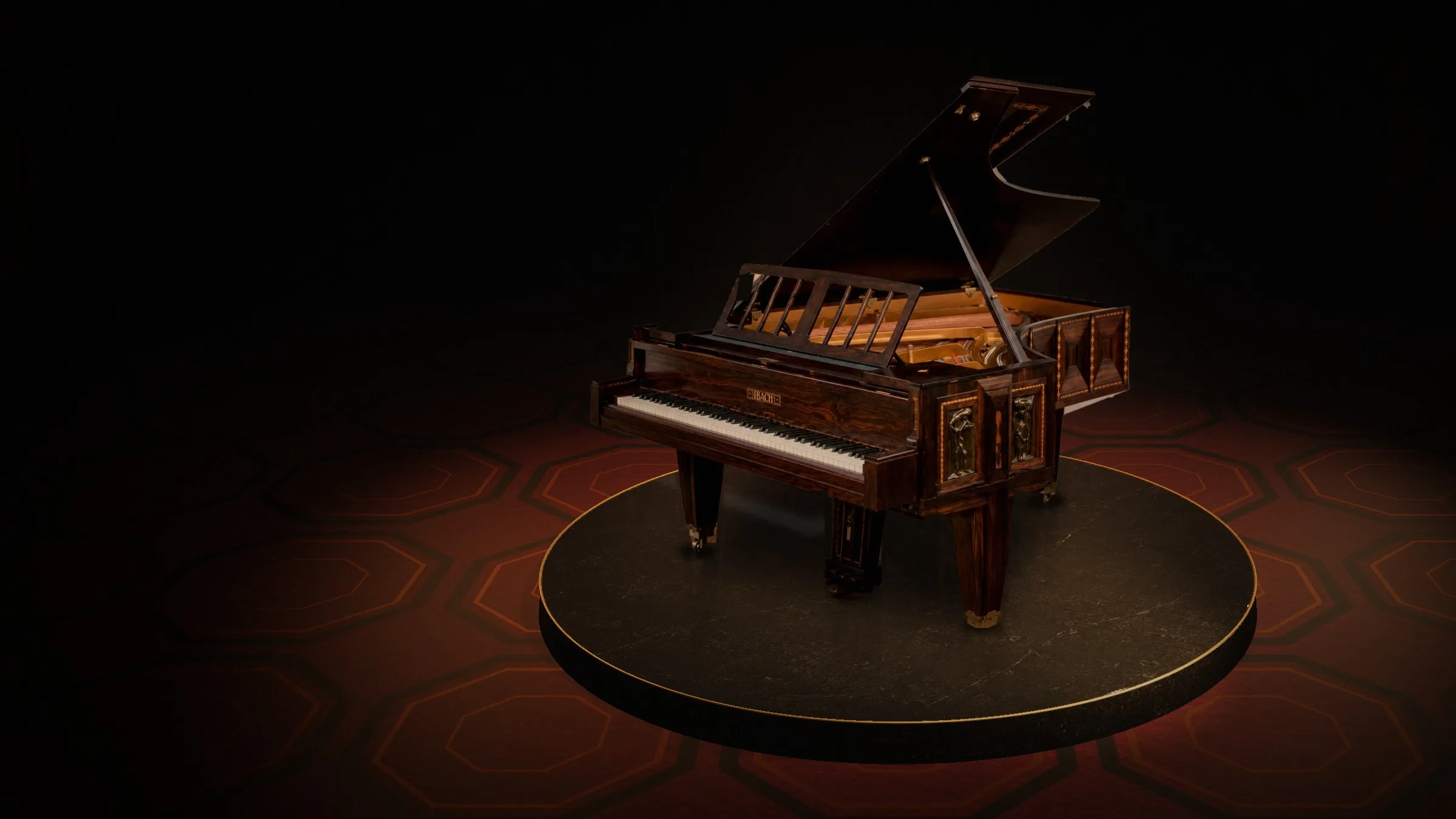
Ibach No. 56281. A grand piano a Grand Duke refused.
It plays all night, then goes under the hammer at the gala’s charity auction. The winning bidder keeps it, or gives it to the Metropolitan Museum of Art as its named donor.
Take the tour to turn the piano on its podium, or simply scroll on. A 3D reconstruction from photographs; dimensions are estimated.
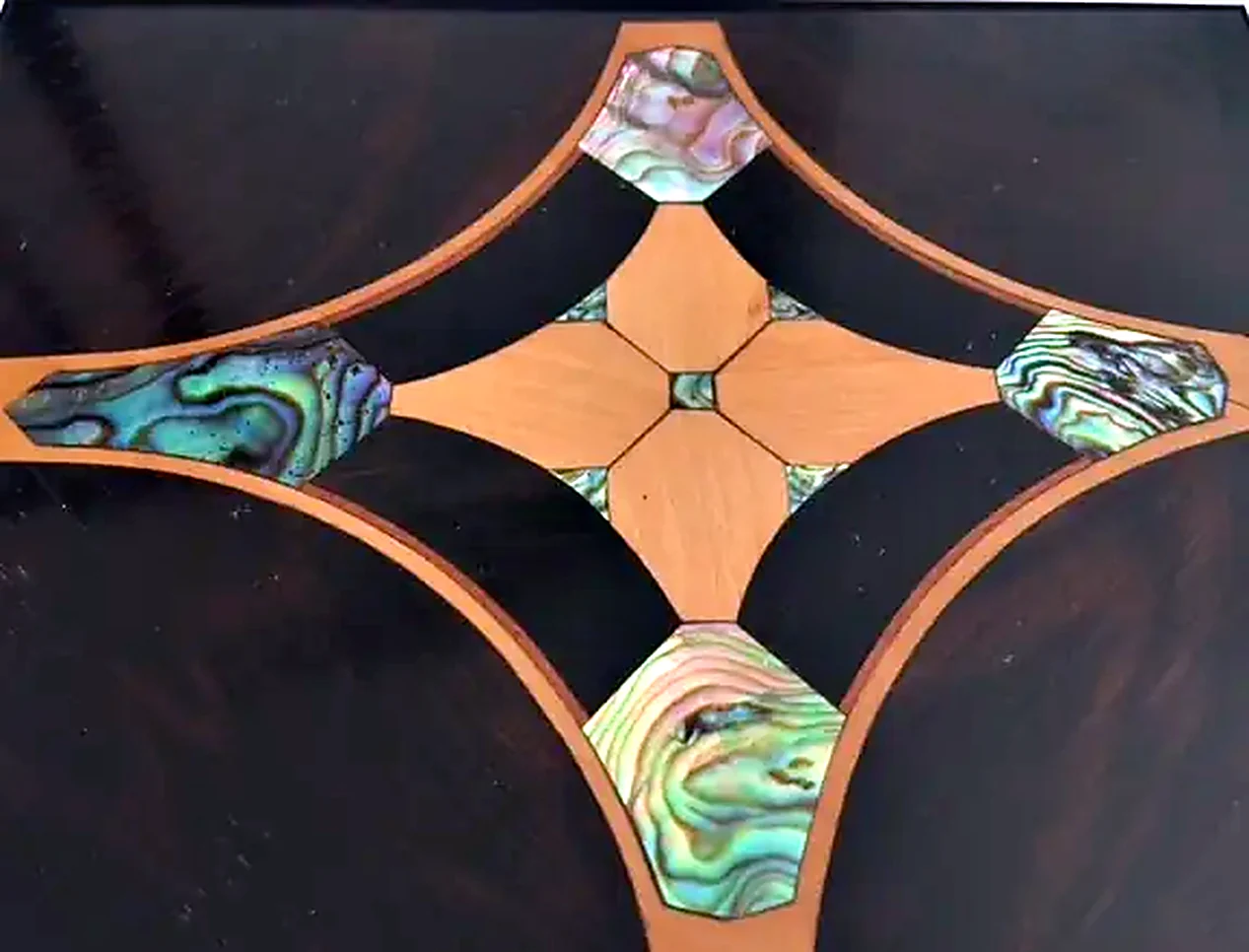
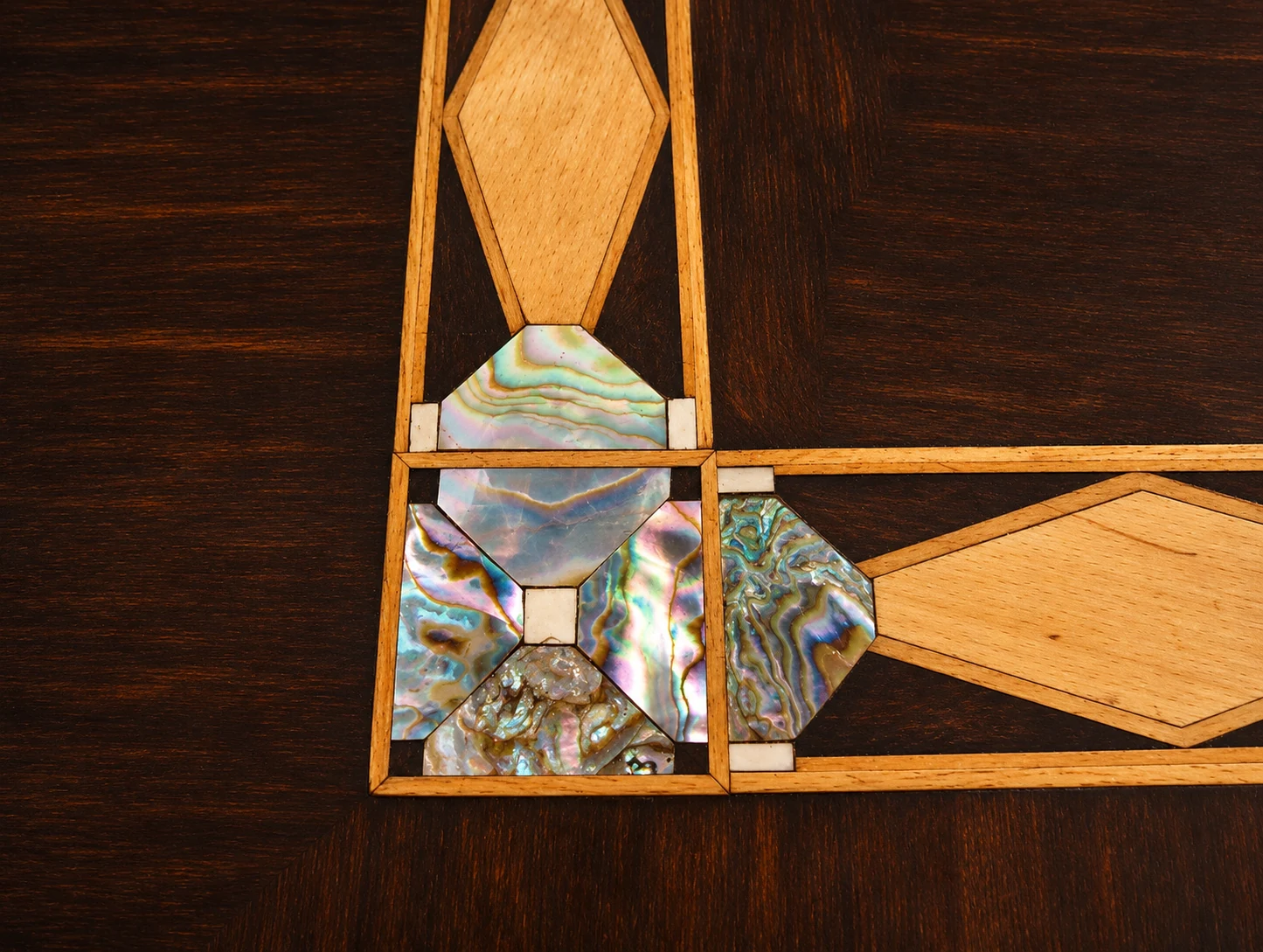
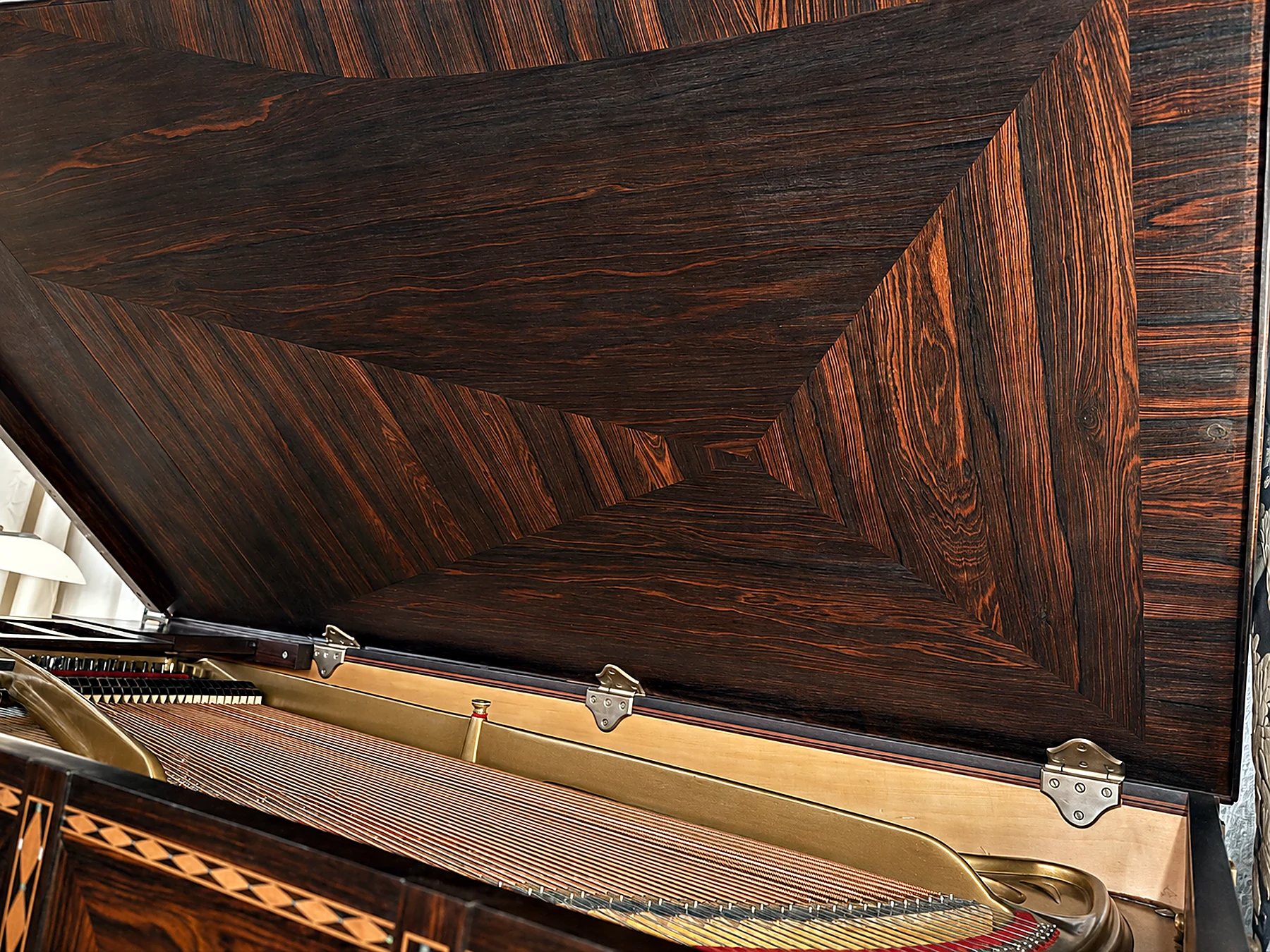
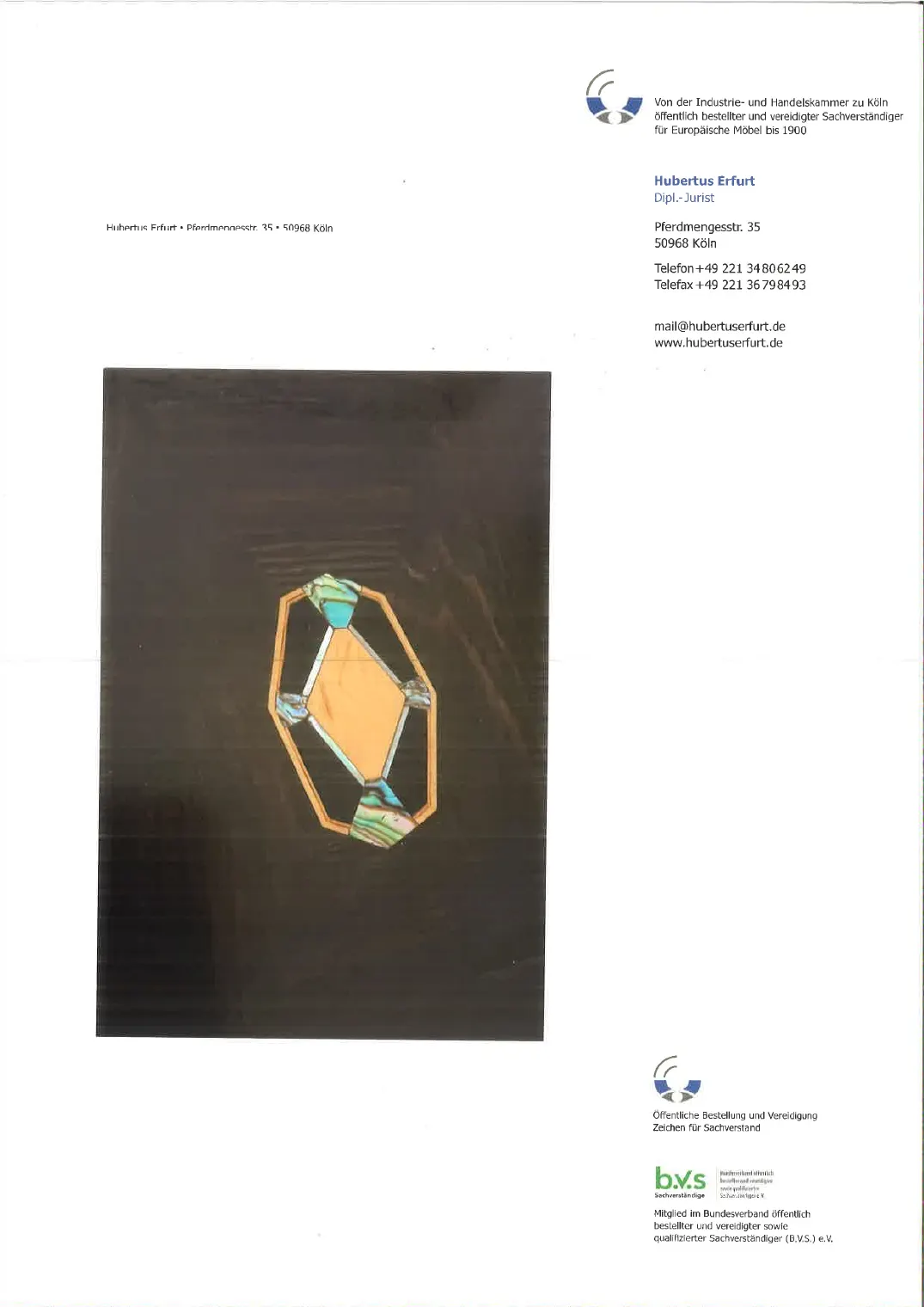
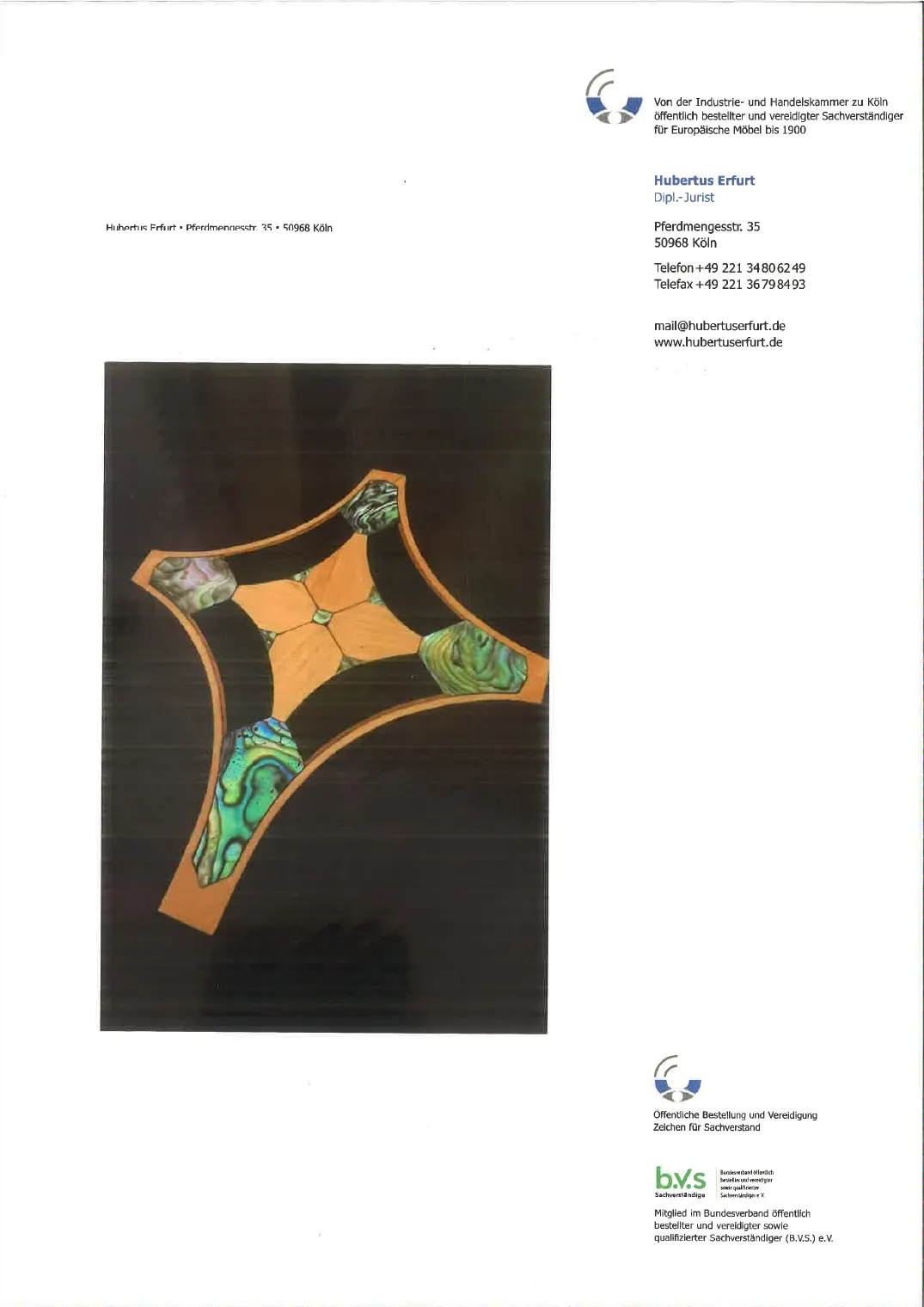
At the centre of the lid sits an inlaid four-pointed star of light wood and abalone shell. Grand Duke Ernst Ludwig of Hesse is said to have refused the piano because he read it as a Masonic symbol. The architect bought it himself.
02 · 1908
Ibach No. 56281
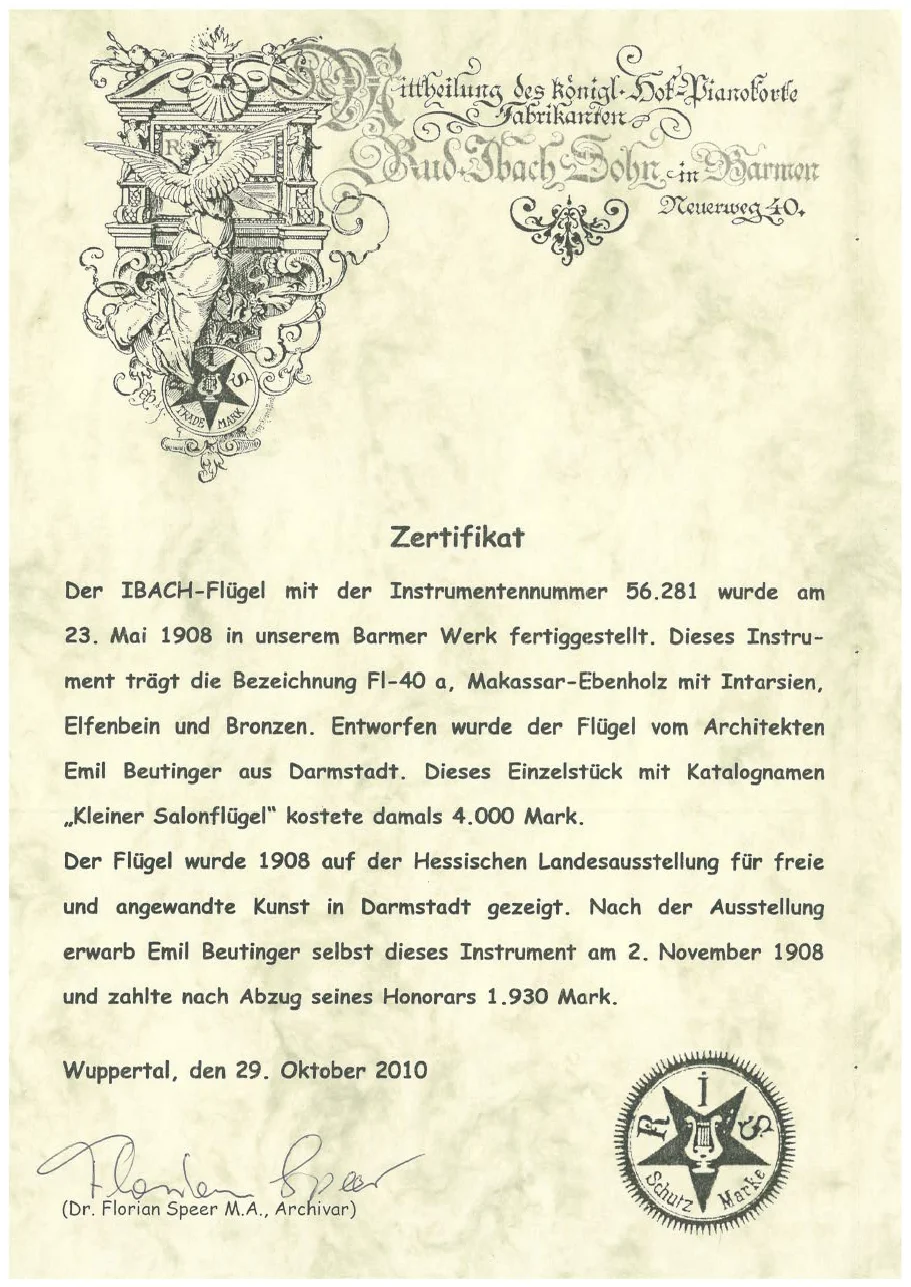
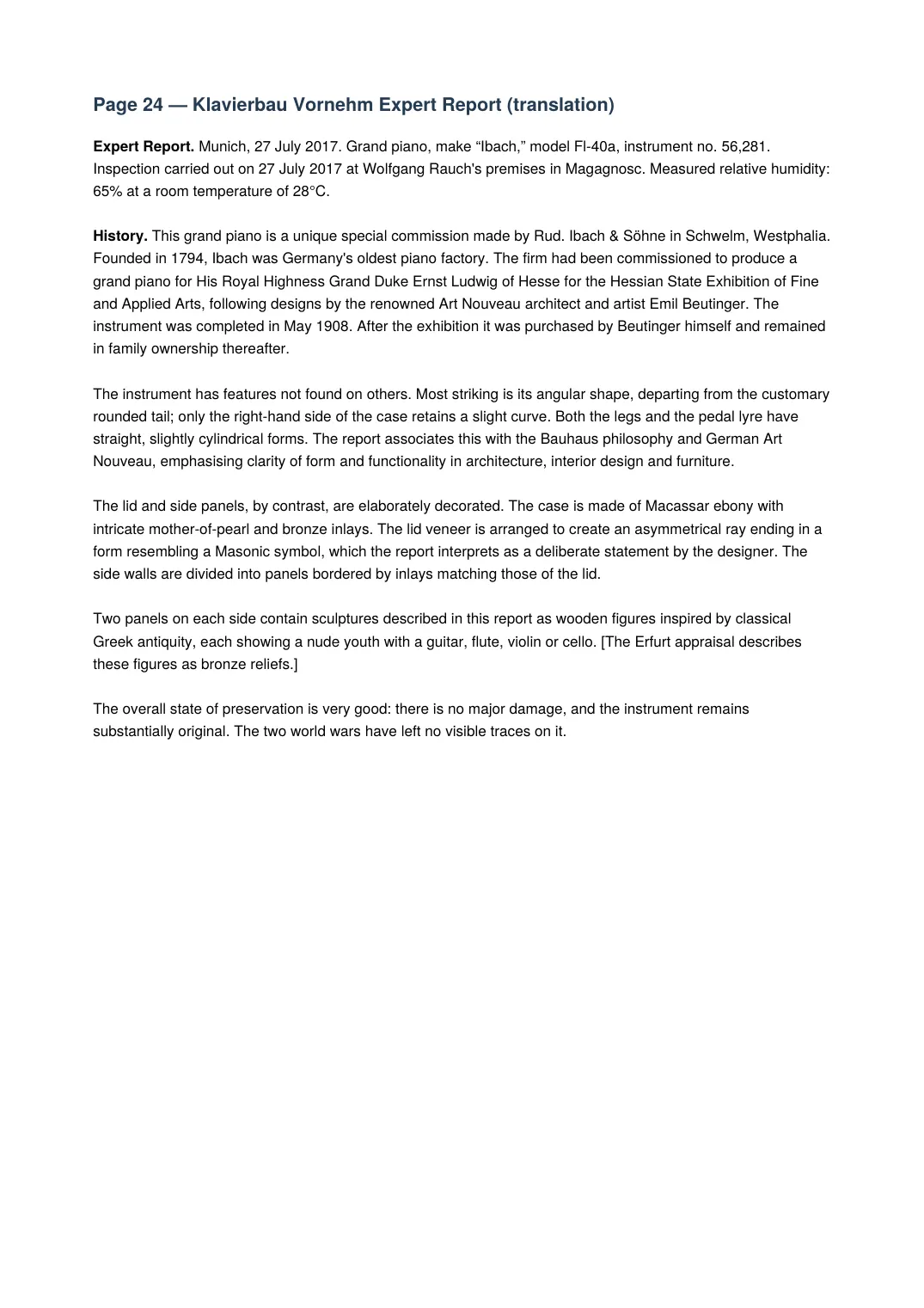
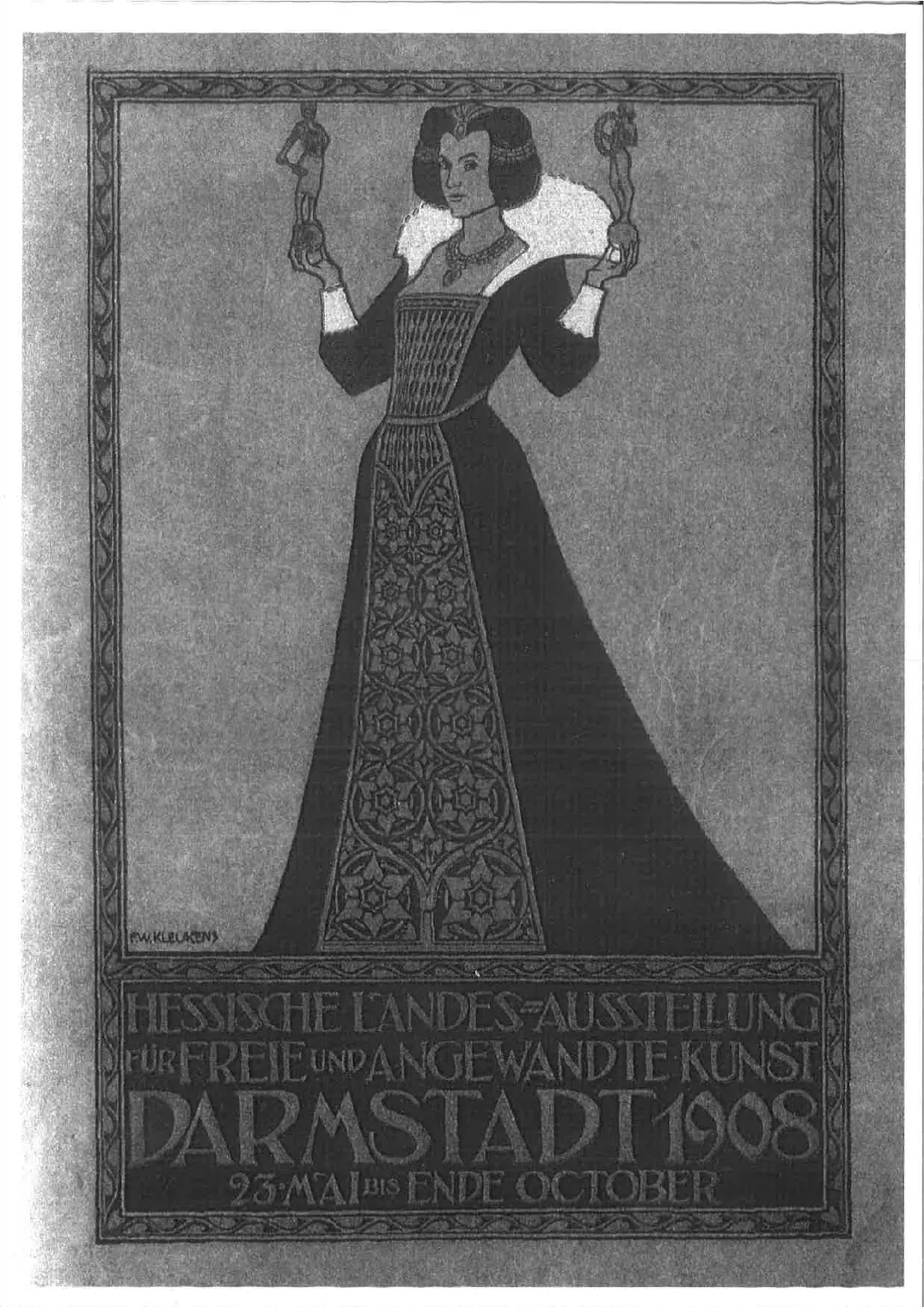
Built by Rud. Ibach Sohn in Barmen and completed on 23 May 1908. Designed by the Darmstadt architect Emil Beutinger for the Hesse State Exhibition of free and applied art.
03 · The keys
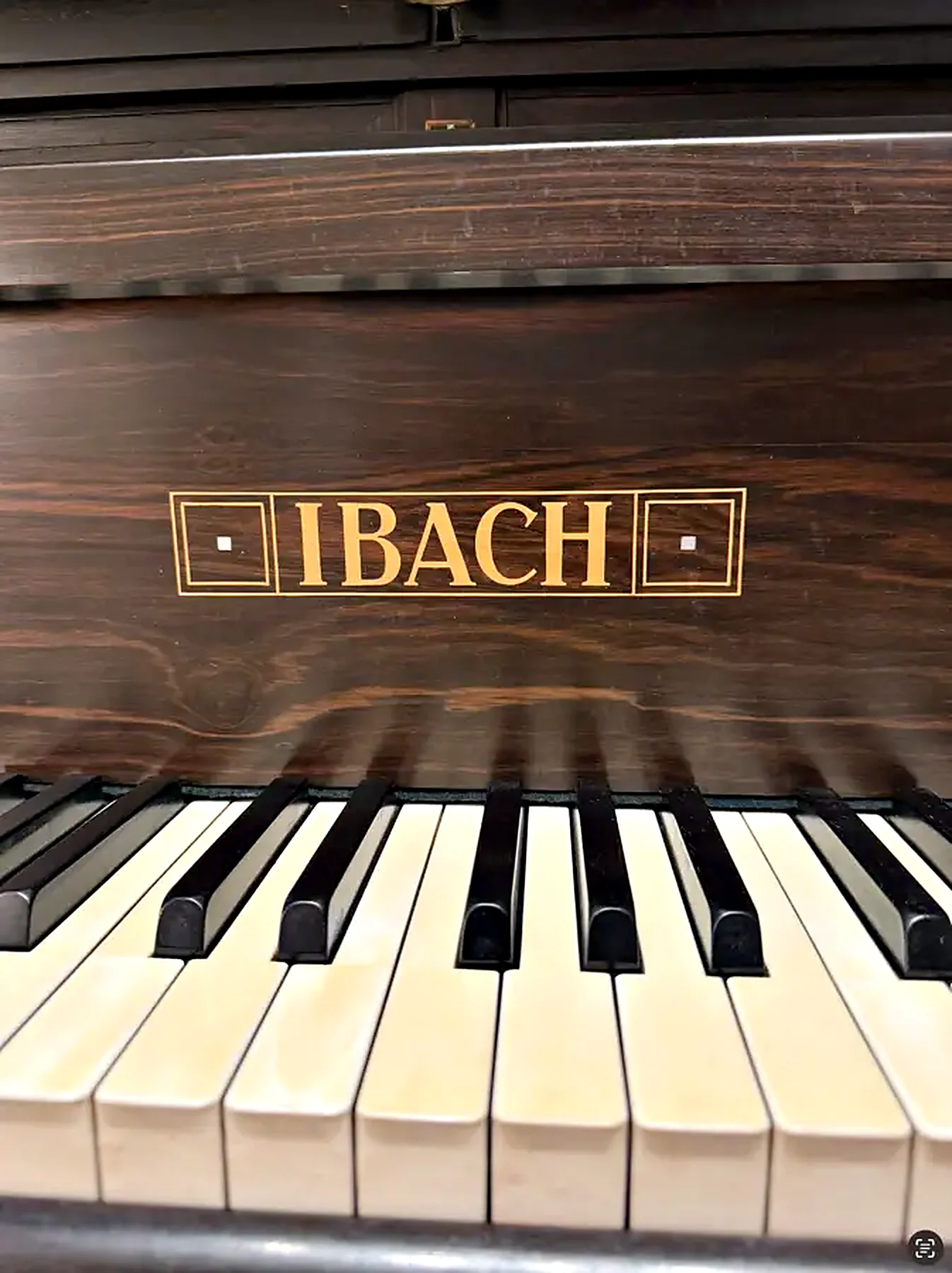
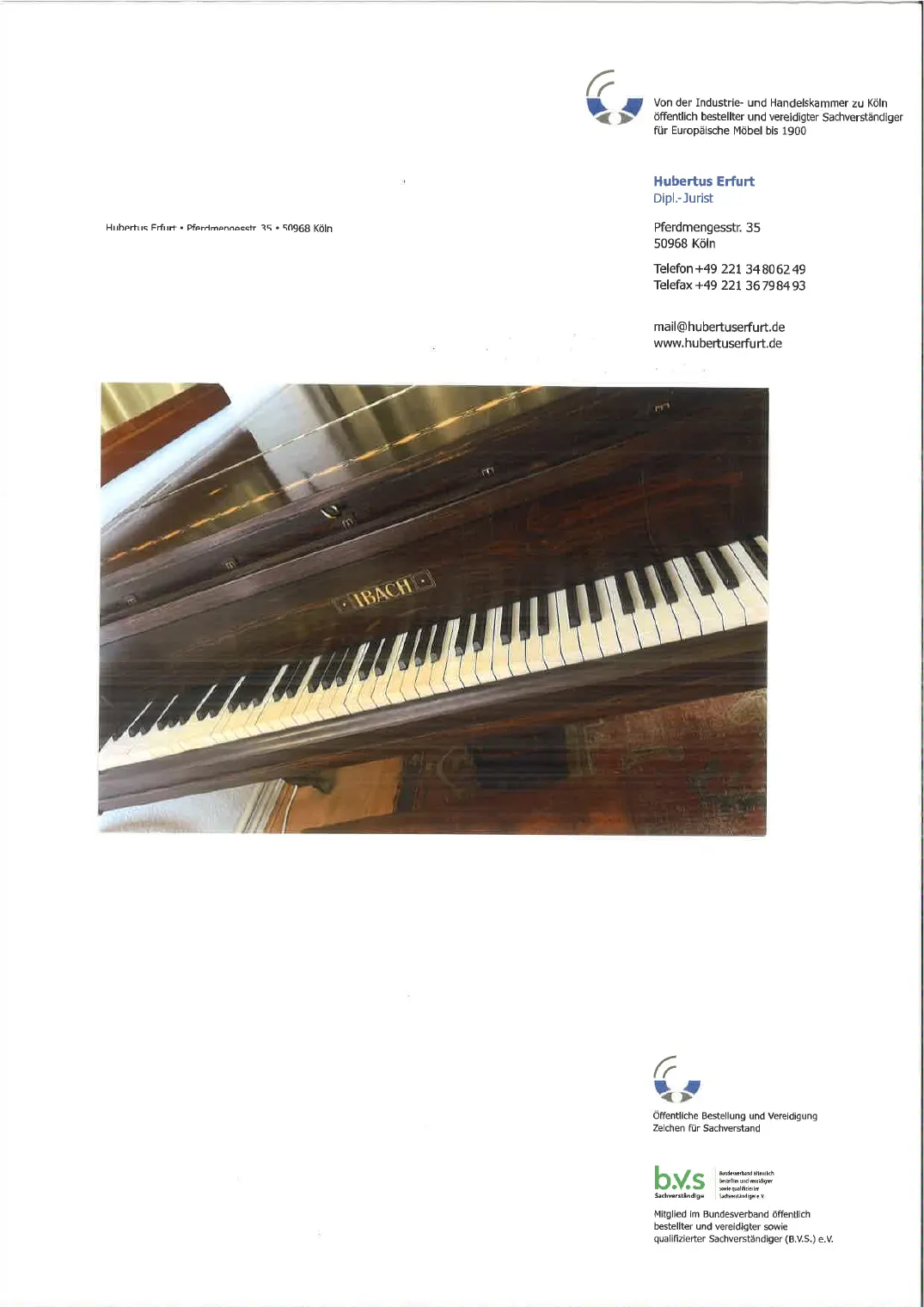
IBACH
The ivory key coverings are the originals of 1908 and have never been replaced. The action, with Erard repetition, is entirely original; it has been overhauled and tuned to a′ = 440 Hz.
04 · The reliefs
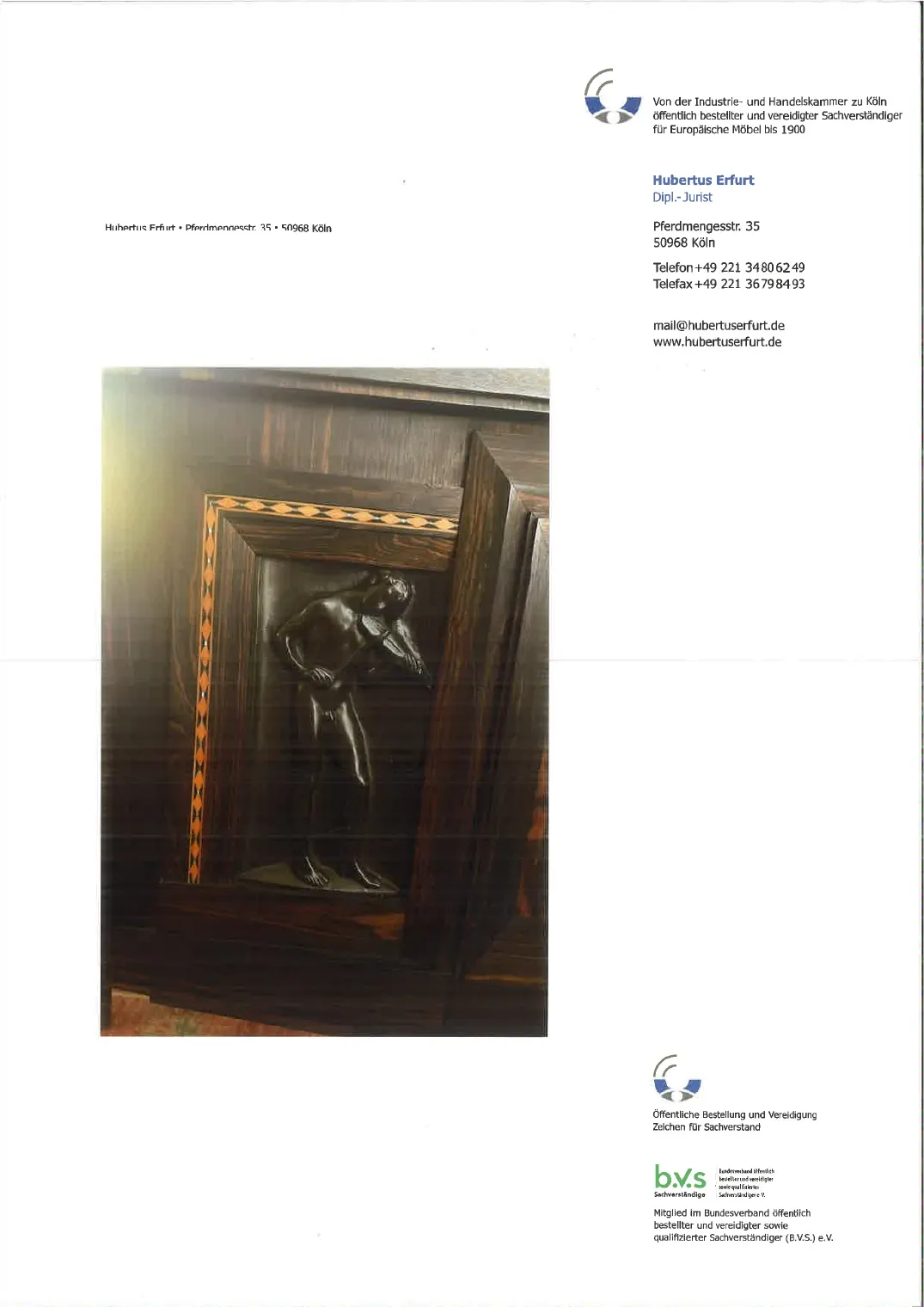
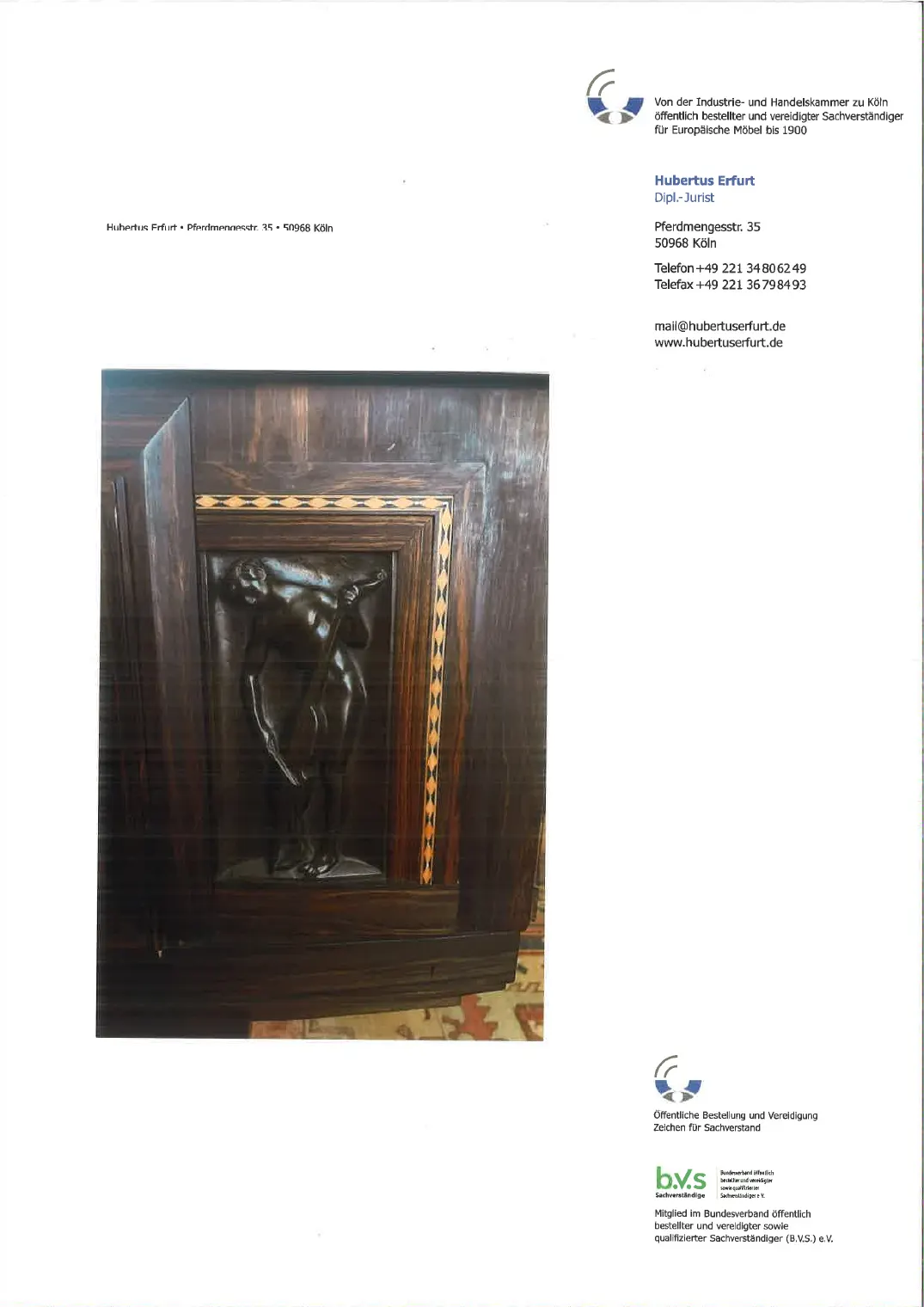
Four bronze musicians
Young musicians with violin and cello on this side, set in coffered frames with bands of inlay. Signed “AA” and attributed to the sculptor Adolph Amberg.
05 · The stand
Square where others curve
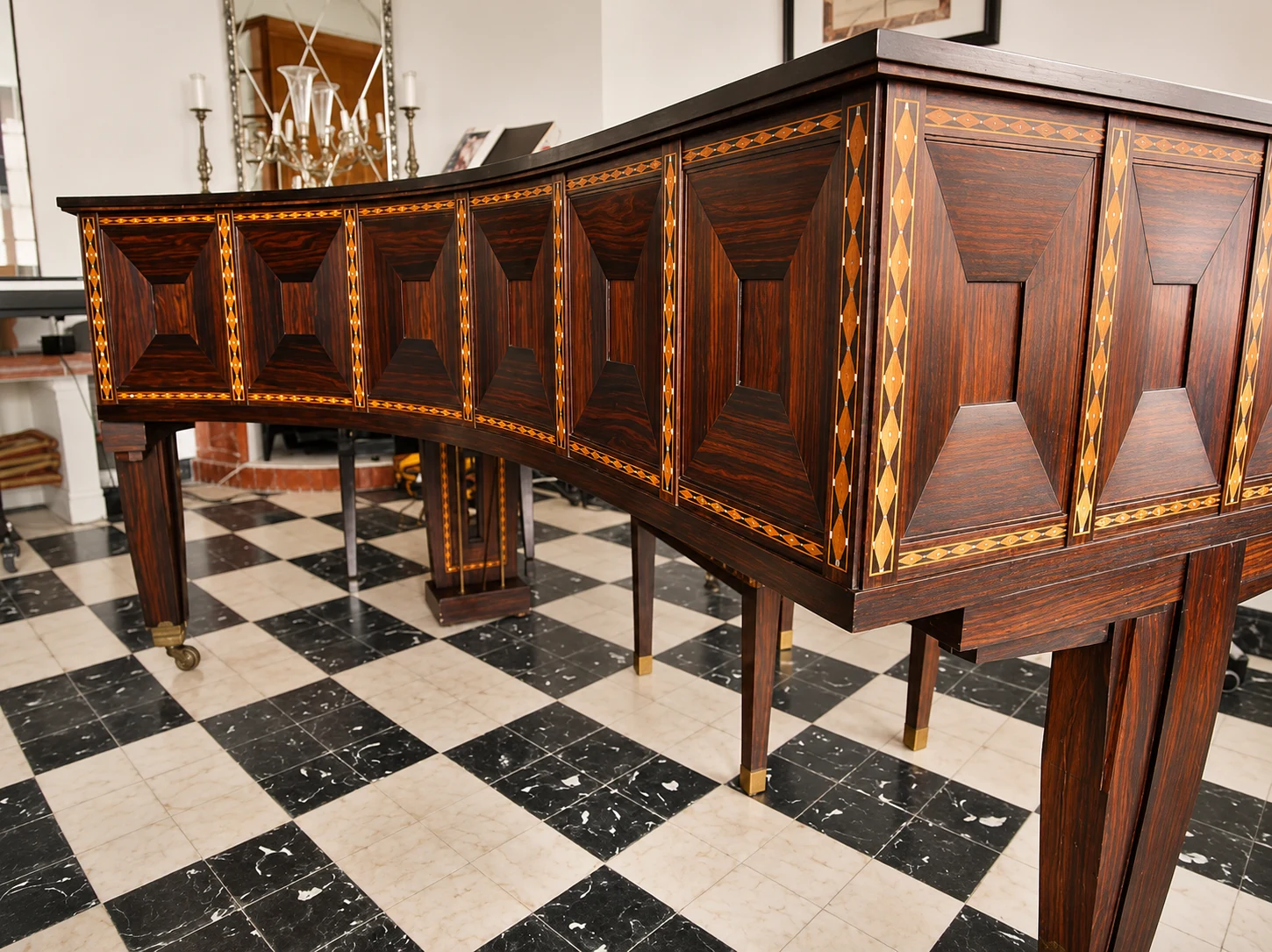
Straight, tapering legs and a rectangular pedal lyre instead of the turned forms of the day. Beutinger’s geometry reads like Art Deco twenty years early.
06 · The wall
Coffers along the curve
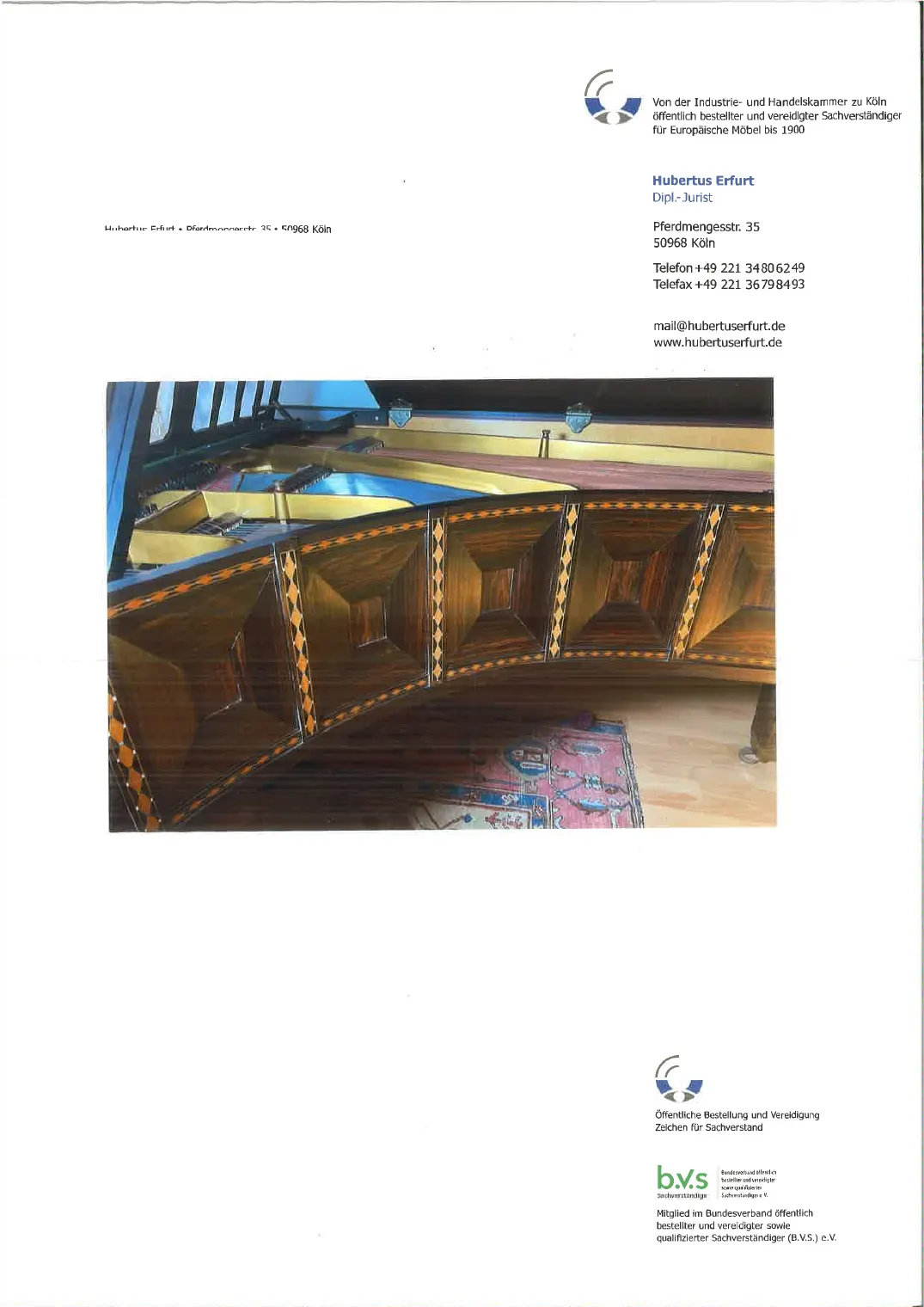
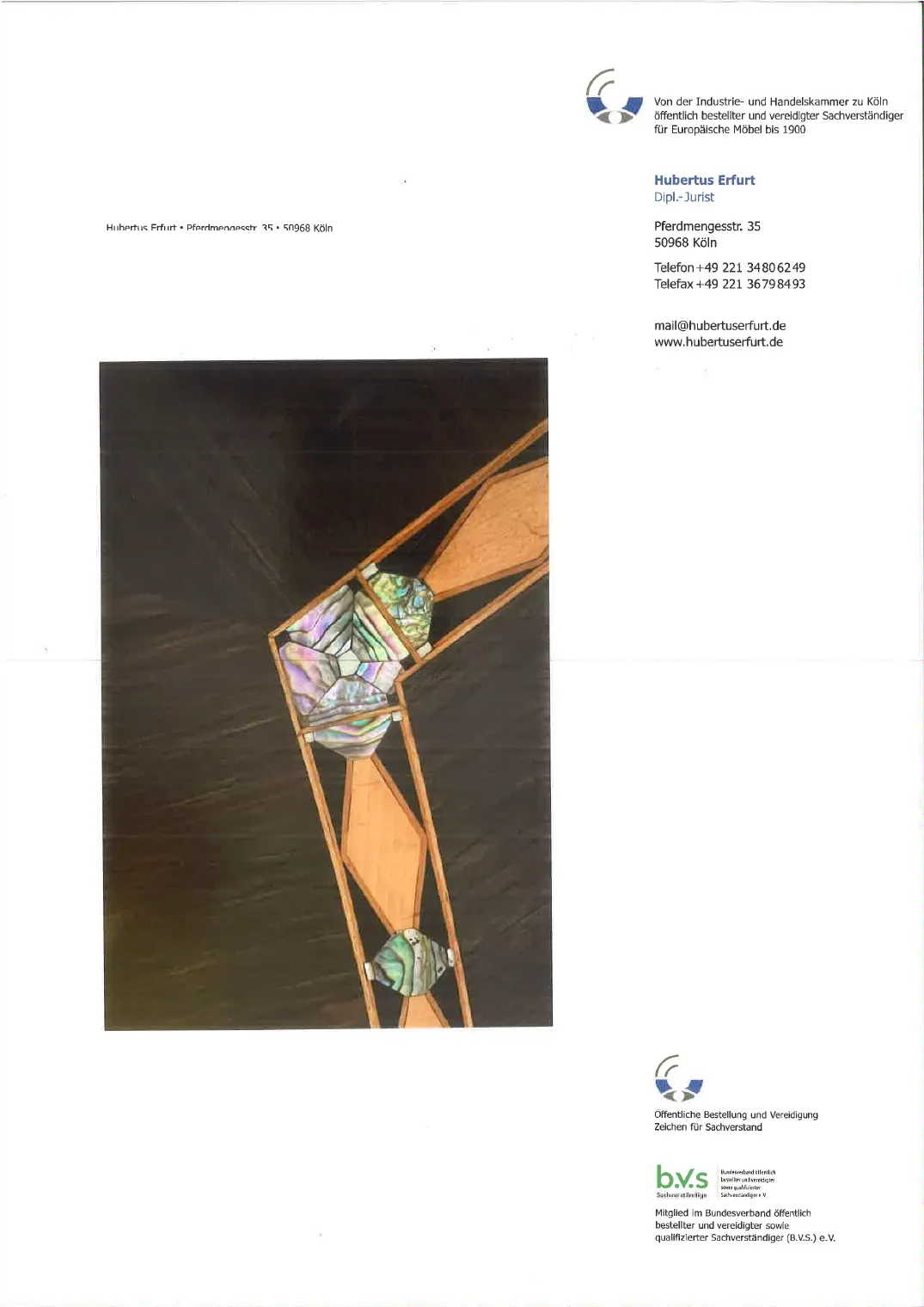
Pyramid-cut coffers in Makassar ebony follow the curved wall, divided by bands of light-wood lozenges and iridescent abalone, with tiny ivory squares at every joint.
07 · The other side
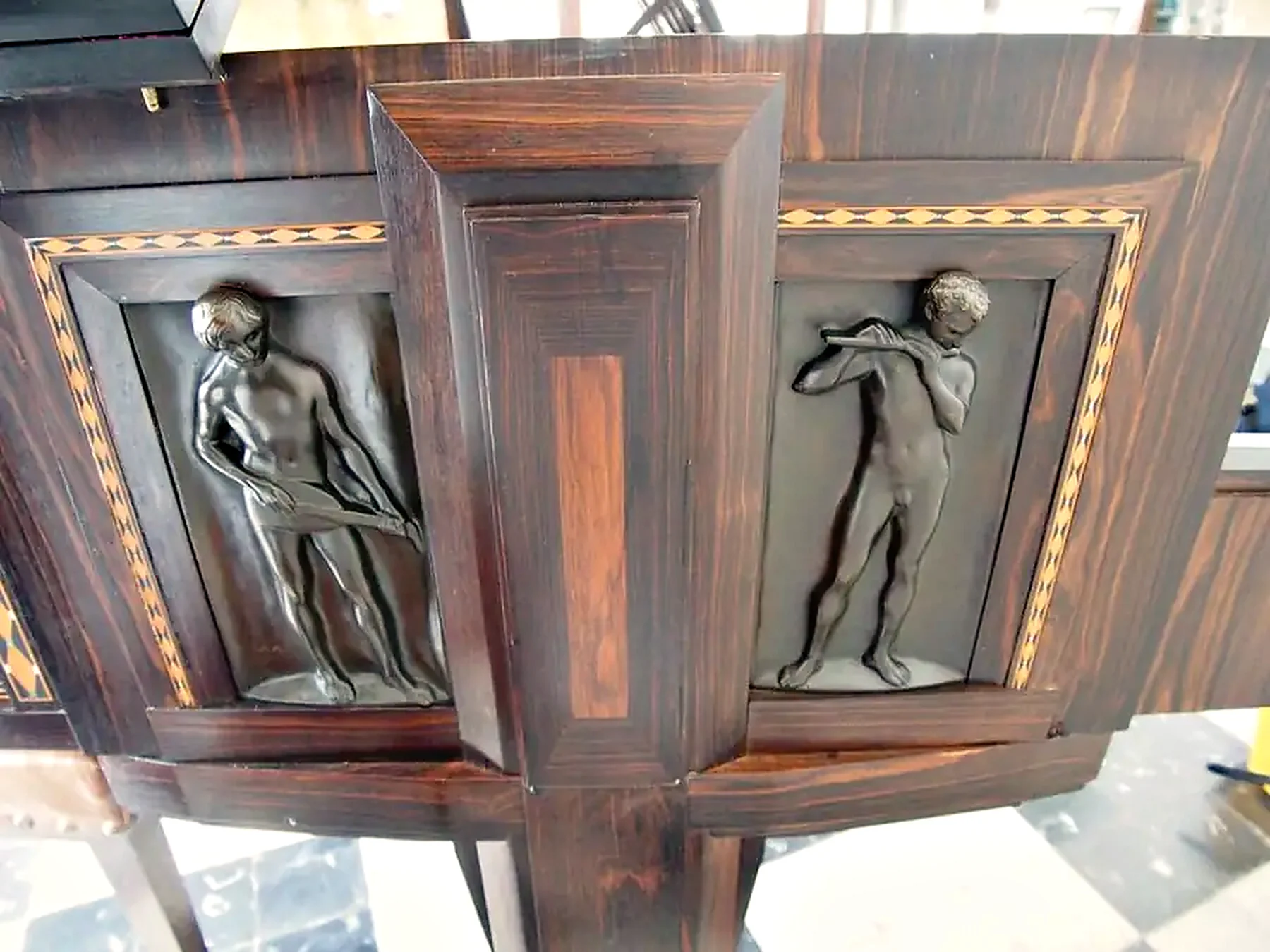
Guitar and flute
The bass side carries the second pair of reliefs. No two figures repeat, and the case is deliberately asymmetric.
08 · Inside
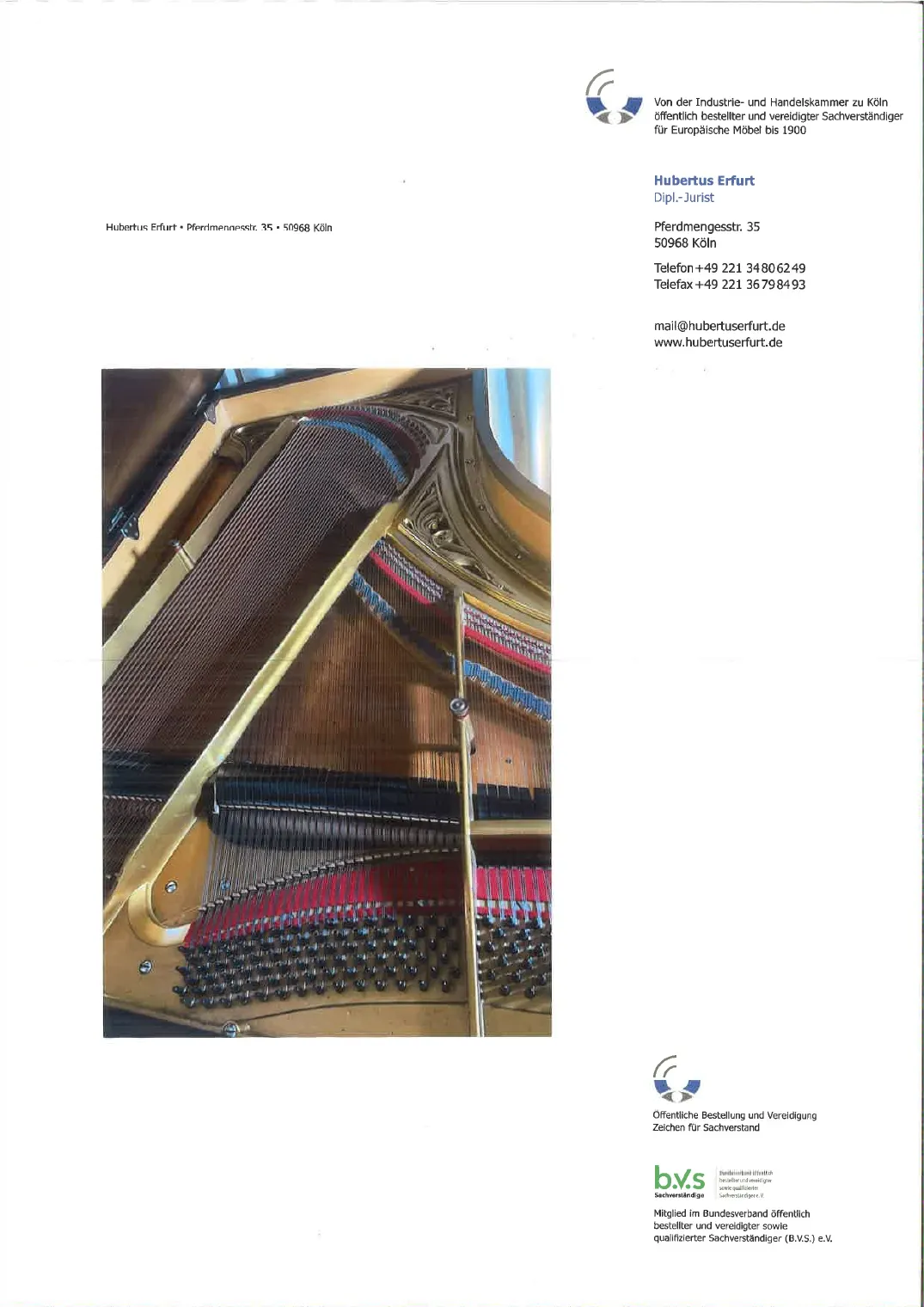
Rays under the lid
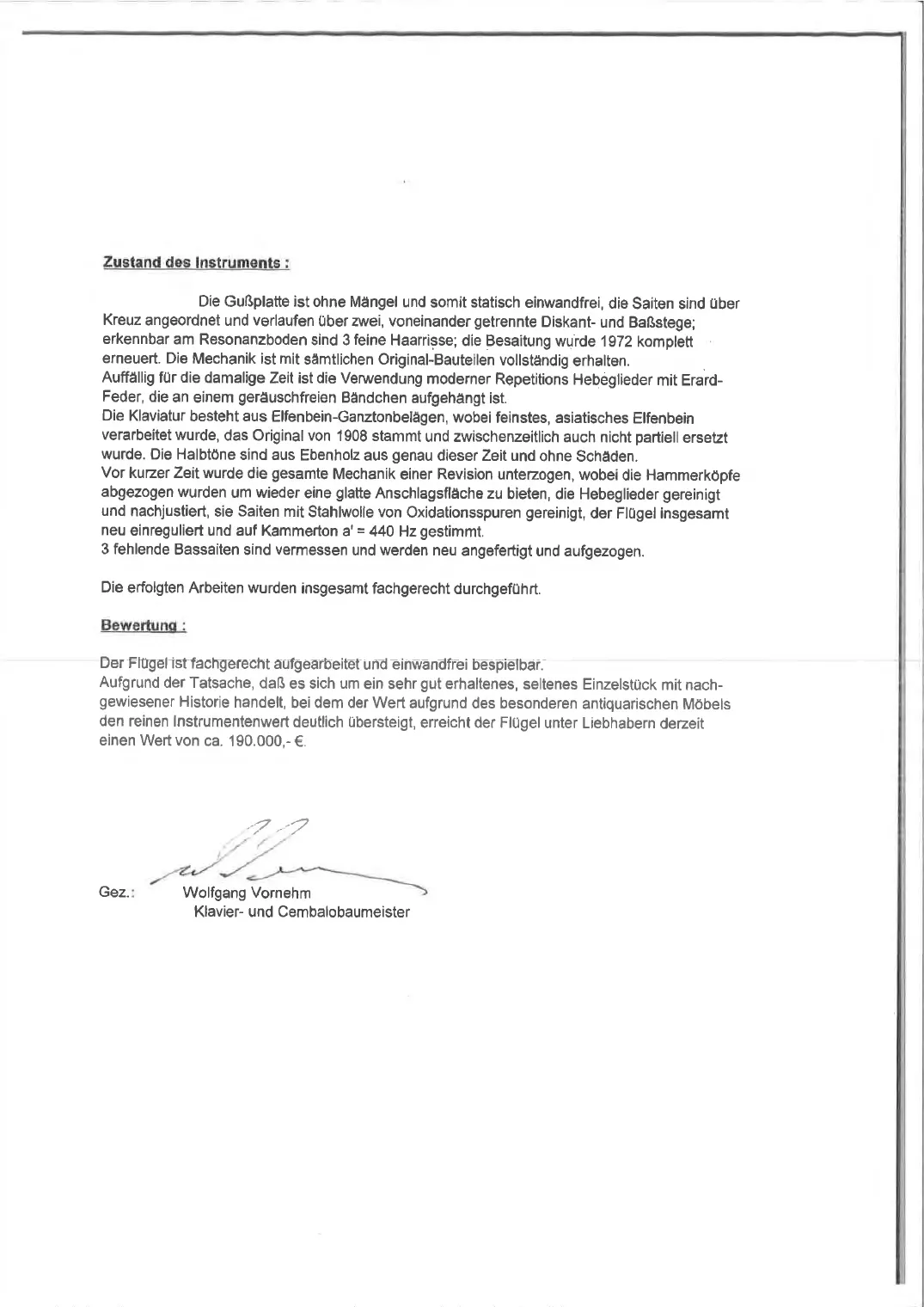
Beneath the lid the veneer is laid in converging rays. Inside, the cast-iron frame is free of defects; the strings were renewed in 1972.
09 · The charity auction
One piano, two World Heritage sites
On the night, the Ibach goes under the hammer for charity. The winning bidder keeps it, or gives it to the Metropolitan Museum of Art, which has signalled strong interest.
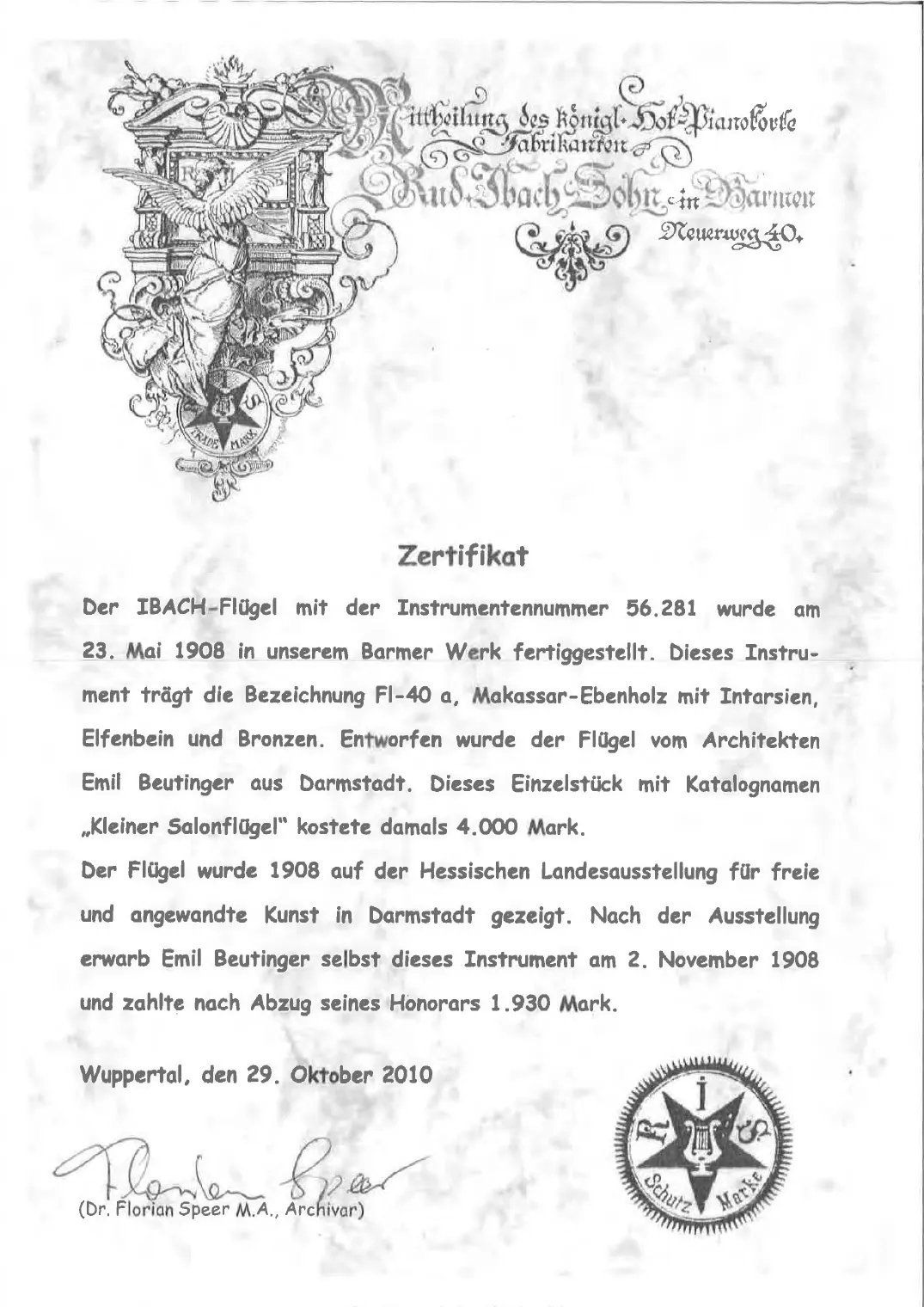
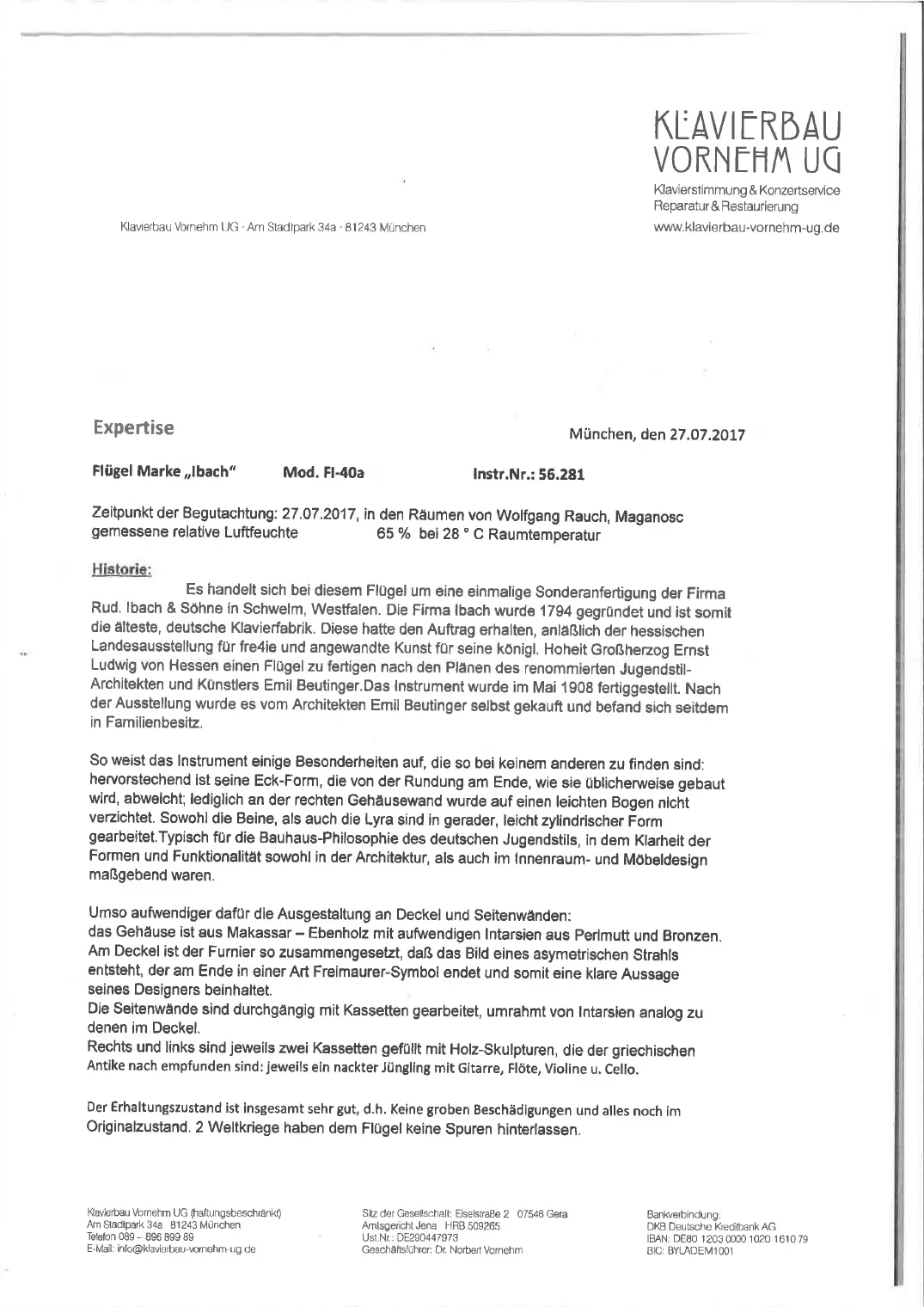
The piano in depthHistory & certificatesThe designer Emil Beutinger, the factory photograph of 1908, the archive certificate, the full 39-page appraisal and the museum verdict.
The designer
Emil Beutinger1875–1957
Architect, teacher of applied arts, and the mayor who stood up to the Nazis.
Beutinger taught in Darmstadt when the Mathildenhöhe made it the centre of German Jugendstil. He designed this piano for the 1908 Hesse State Exhibition, and bought it himself when the Grand Duke declined it.
As Lord Mayor of Heilbronn he was driven out by the Nazis in 1933, and returned in 1945 to rebuild the city.
Life
1875 Born in Heilbronn
1903 Lecturer and deputy director, trade school in Darmstadt
1907 Founds the practice Beutinger & Steiner, with factories, schools and a department store to its name
1908 Designs Ibach No. 56281 for the Hesse State Exhibition on the Mathildenhöhe
1913–1921 Director of the School of Applied Arts, Wiesbaden; member of the Deutscher Werkbund
1921–1933 Lord Mayor of Heilbronn, re-elected in 1931 with 85 % of the vote
1933 Forced out of office; SA men storm his house and he escapes through a window
1945–1946 Lord Mayor again, leading the rebuilding of the destroyed city
1955 Honorary citizen of Heilbronn
1957 Dies in Heilbronn
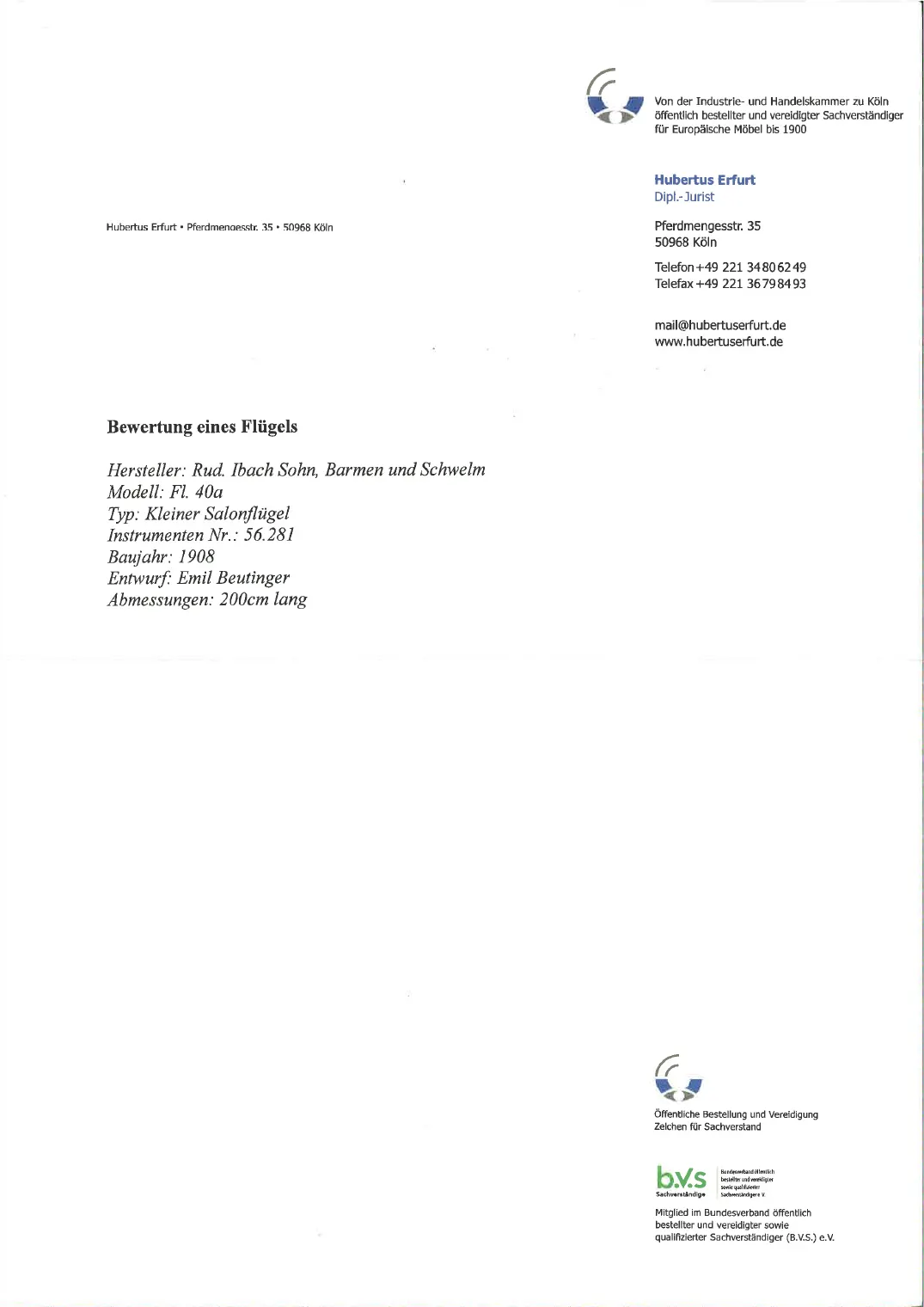
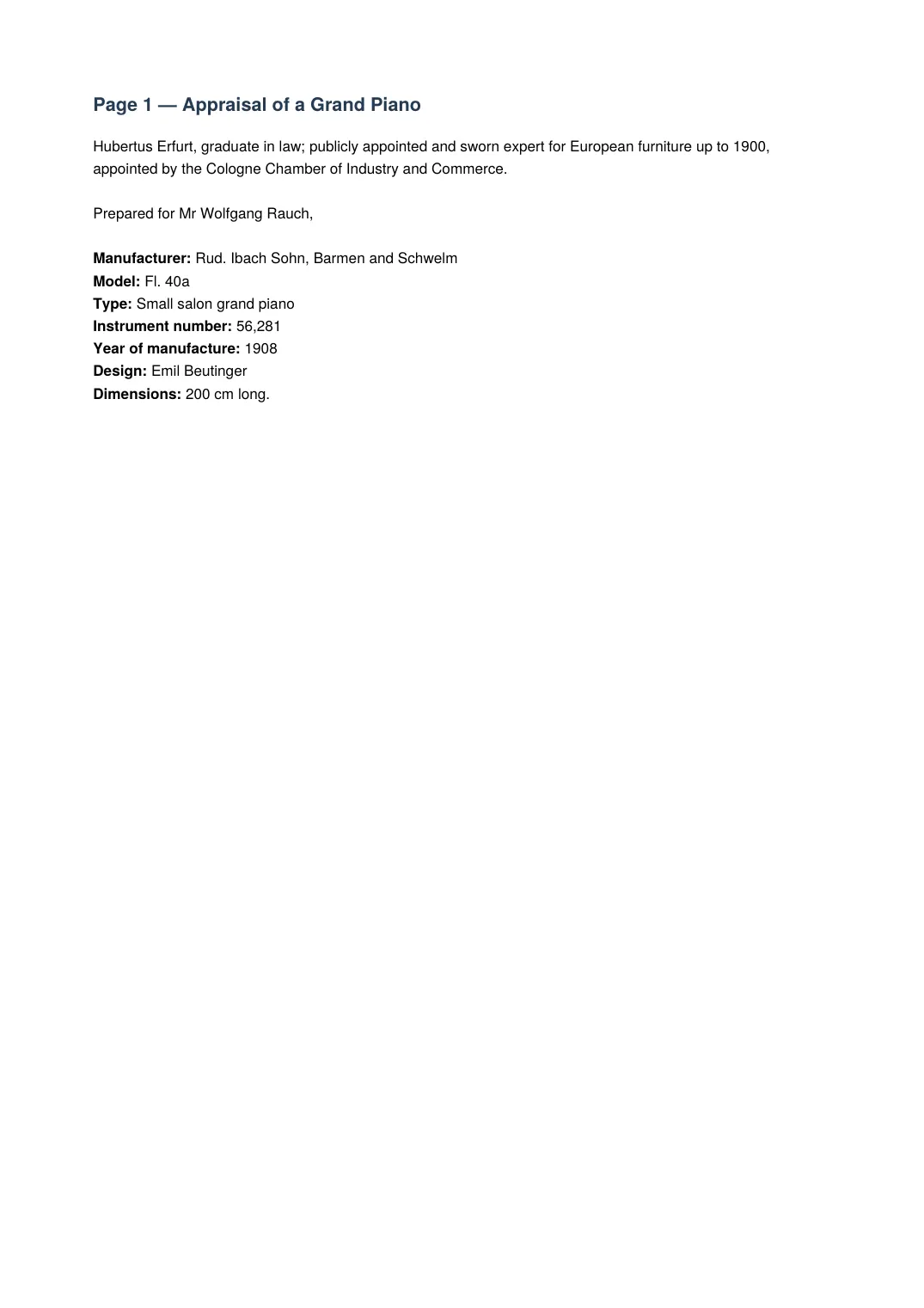
Factory photograph, 1908Certificate, Dr. Florian Speer, 2010Report, Hubertus Erfurt, sworn expert · in English
Designed by the architect Emil Beutinger and built by Rud. Ibach Sohn for the Hesse State Exhibition in Darmstadt, 1908. Square where every other piano curves, it reads like Art Deco twenty years early.
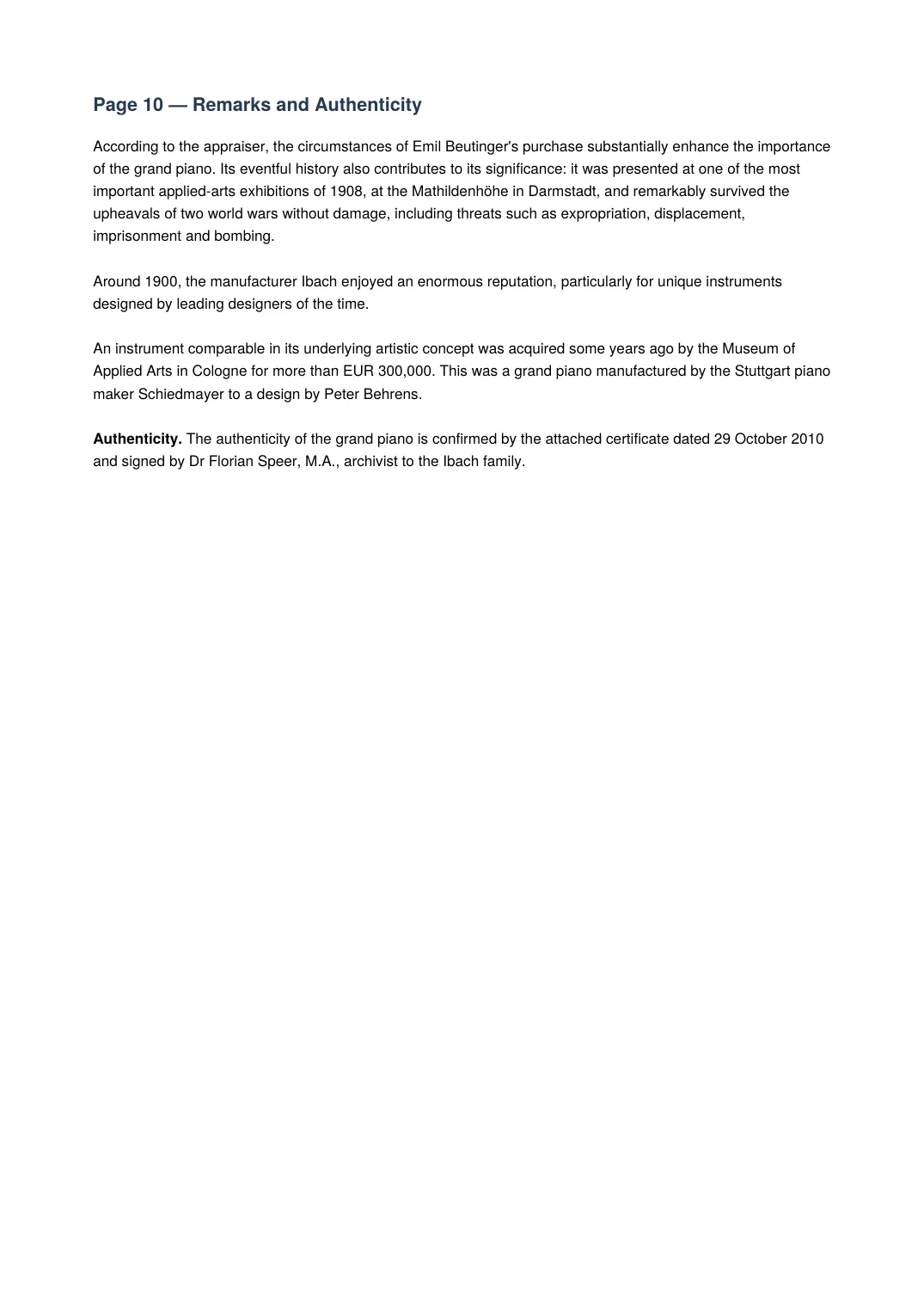
The piano was made for Grand Duke Ernst Ludwig of Hesse. He declined it, so the story goes, because he saw a Masonic star in the veneer of the lid. Beutinger bought it himself, and it stayed in his family through two world wars without a scratch.
A museum piece
"The instrument is without a doubt a museum piece."Prof. Dr. Conny Restle, Musical Instrument Museum Berlin, 2015
Composite
Facts
Rud. Ibach Sohn, model Fl-40a, serial 56281, completed 23 May 1908, 200 cm
Makassar ebony with inlays of mother of pearl, ivory and bronze
Four bronze reliefs of young musicians, signed "AA", attributed to Adolph Amberg
Original 1908 ivory keys, original action with Erard repetition
Exhibited on the Mathildenhöhe, Darmstadt, today a UNESCO World Heritage site
Expert opinions
Certificate, Ibach archivist Dr. Florian Speer, 2010
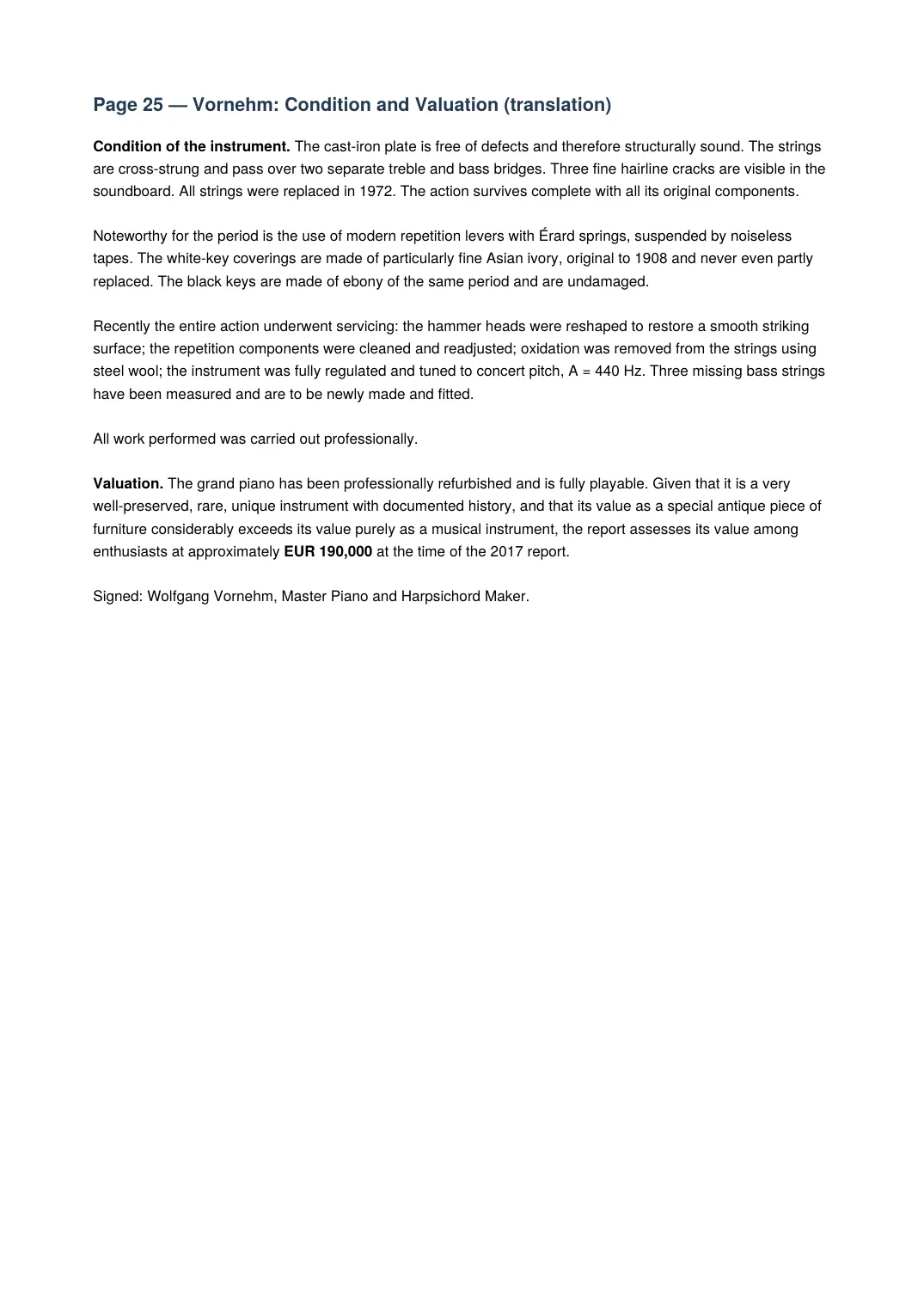
Appraisal, master piano builder Wolfgang Vornehm, 2017: approx. €190,000
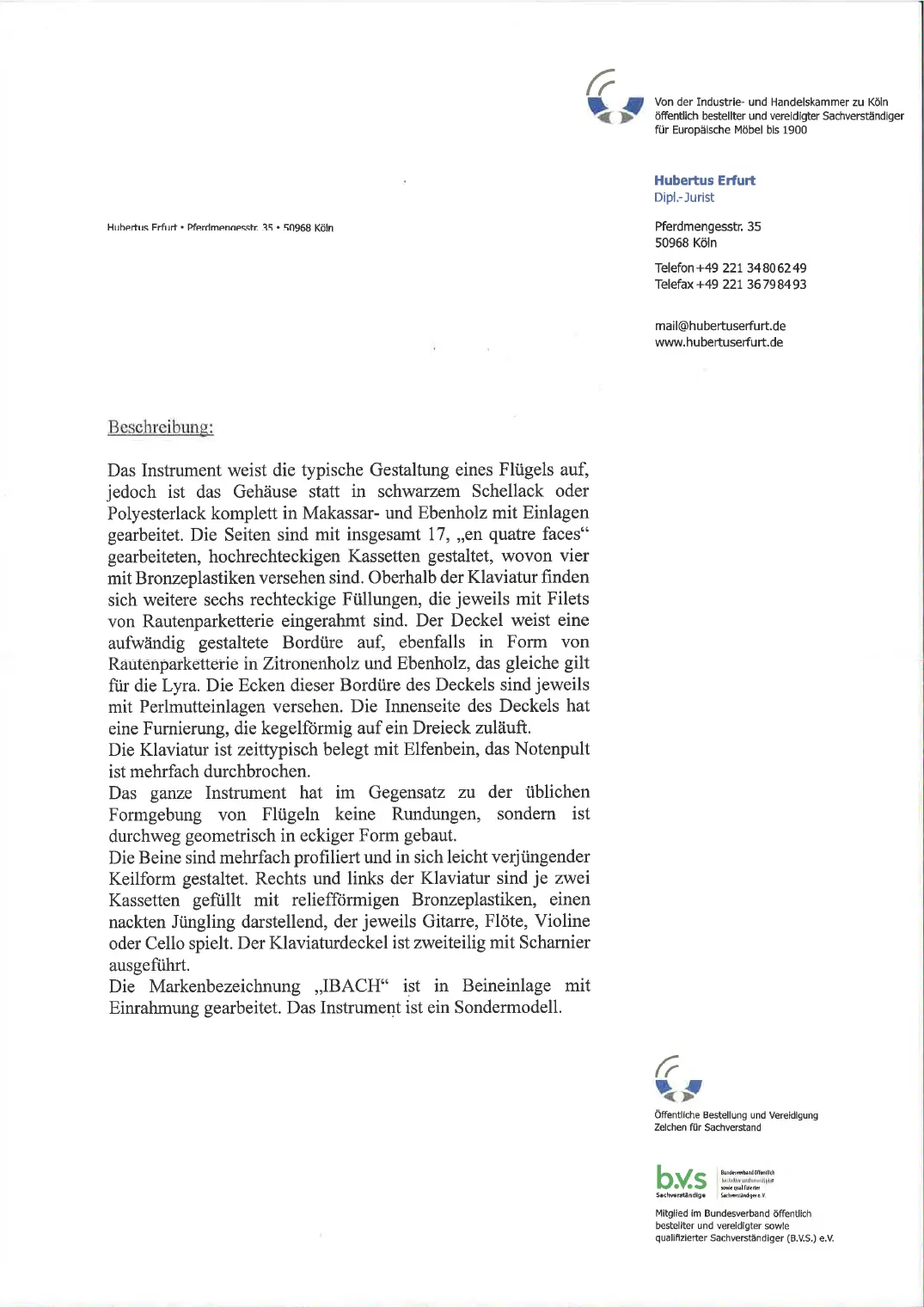
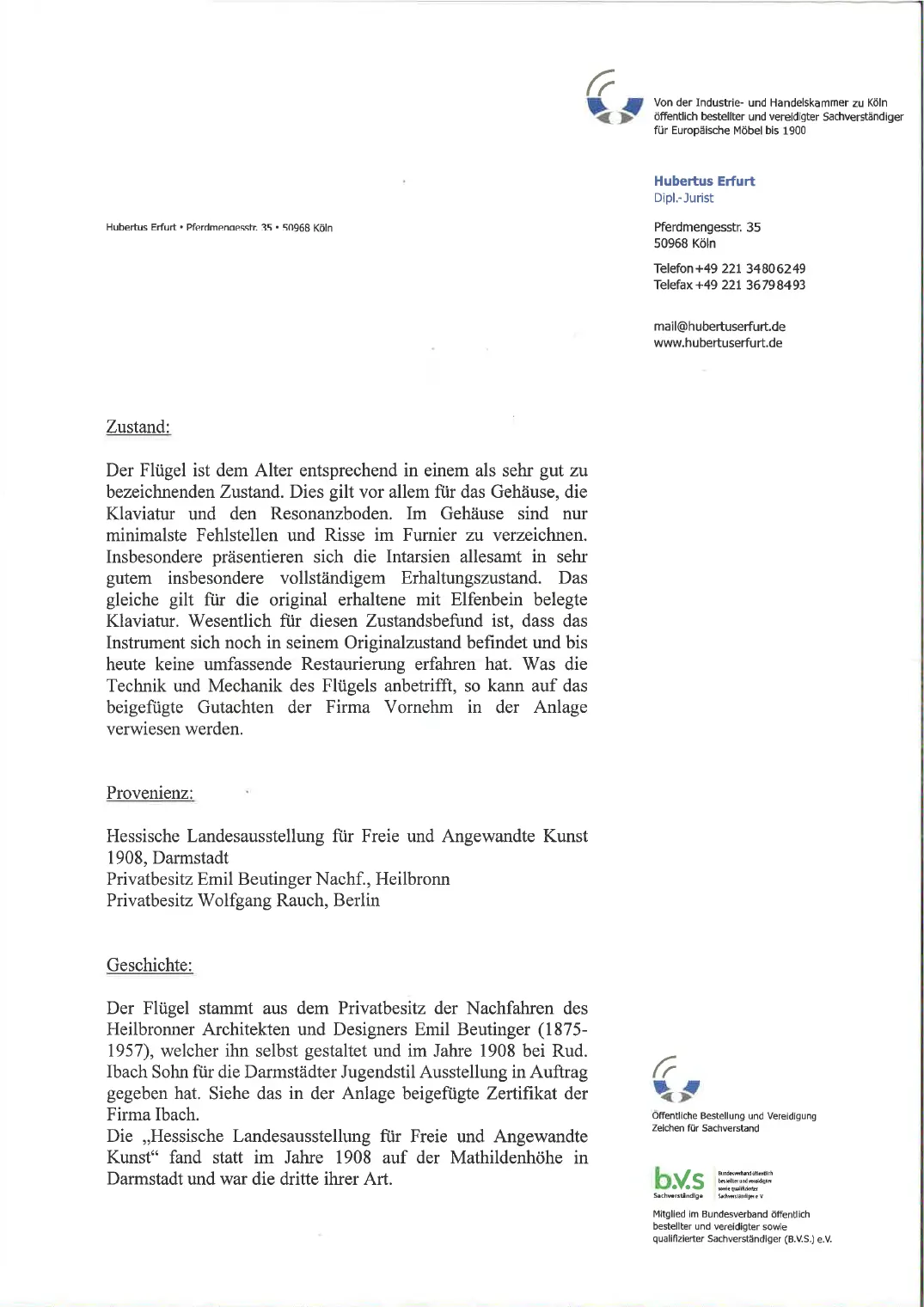
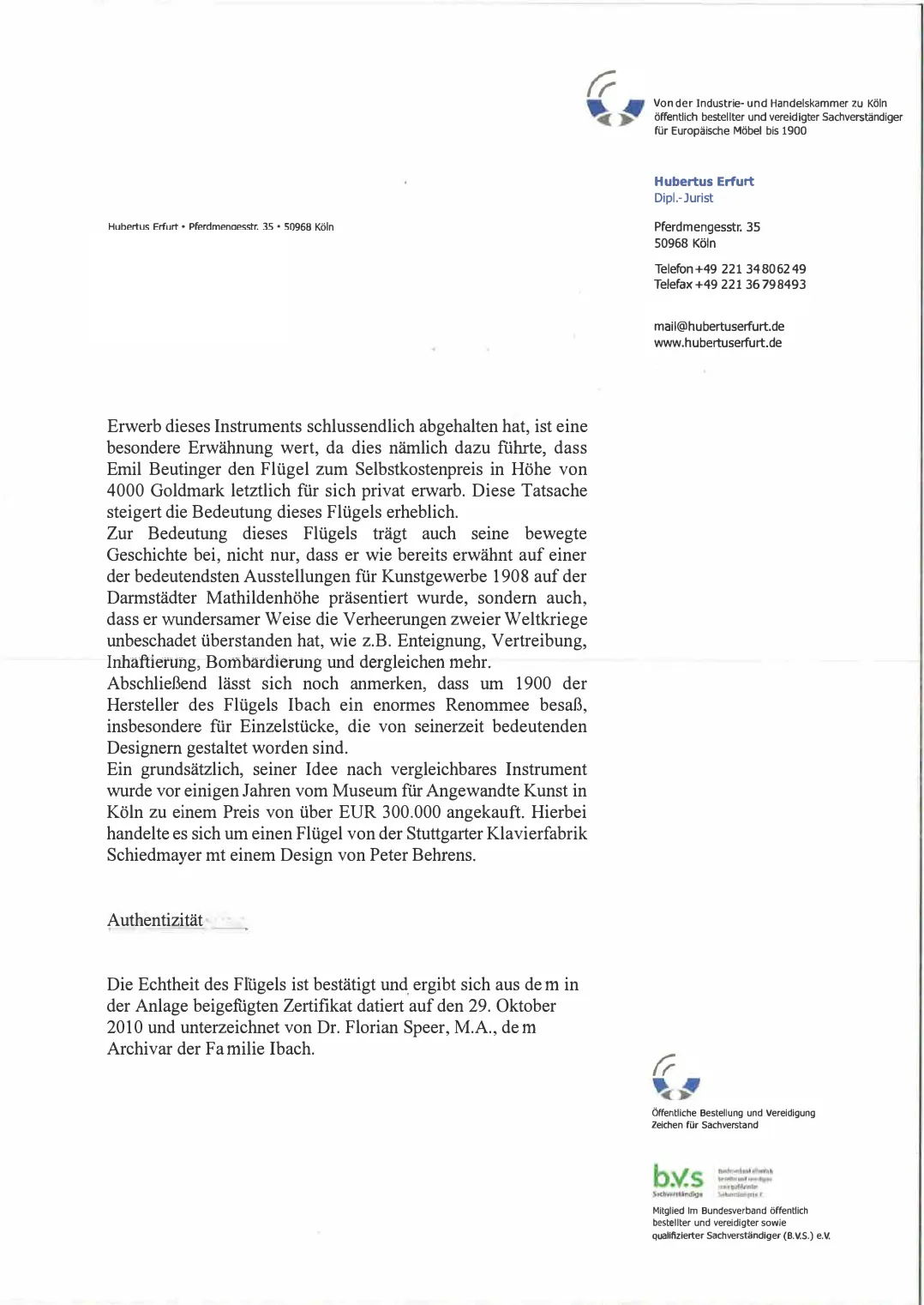
Report, Hubertus Erfurt, publicly appointed and sworn expert for European furniture before 1900: "a museum-worthy and unique masterpiece"
Comparable: a Schiedmayer grand designed by Peter Behrens was acquired by the Museum of Applied Arts Cologne for over €300,000
Shipping and compliance
Sea container, sealed against humidity, approx. €3,000–4,000
Ivory: antique and musical-instrument exemptions apply; export reviewed by expert Hubertus Erfurt
California sale: musical-instrument exemption (ivory well under 20% of volume), full provenance documented
Charity auction
One piano, two World Heritage sites
Auctioned on the night, for charity.
UNESCO Memory of the World · 2001MetropolisThe first film in the Memory of the World Register.
UNESCO World Heritage · 2021Mathildenhöhe DarmstadtHome of German Jugendstil, where this piano was shown in 1908.
Give it to the MetBe named donor of a museum piece first shown at Metropolis 100.
Keep itA unique 1908 grand by Beutinger and Ibach, appraised at approx. €190,000.
Either way, the proceeds go to charity.
Exhibition, film & keynotes
The story of the image
Two guests of honour bring their families' history into the room: on the walls, and in a short talk at the piano between courses.
Prof. Alexander Luckow
Film architecture of the Golden Twenties
Original set drawings by his grandfather Robert Herlth, film architect for Fritz Lang and F. W. Murnau, hang in the room from the family collection.
KeynoteBuilding the dream: film architecture from Babelsberg to Hollywood
Bertina Schulze-Mittendorff
The Machine-Man
Her father Walter Schulze-Mittendorff sculpted the most famous robot in film history in 1926, from a body cast of Brigitte Helm and a new material called plastic wood.
KeynoteMaking Maria: the story of the Machine-Man
The film on the LED wall
Key scenes from a public-domain print, upscaled to 4K; the strongest runs in sync with the Rheingold climax.
USA: Metropolis is in the public domain since 1 January 2023.
Europe: protected until the end of 2046. The 2001 and 2010 restorations carry their own rights, so we work from an older public-domain print.
The room
Two rooms from 1927 and 1928
Hollywood
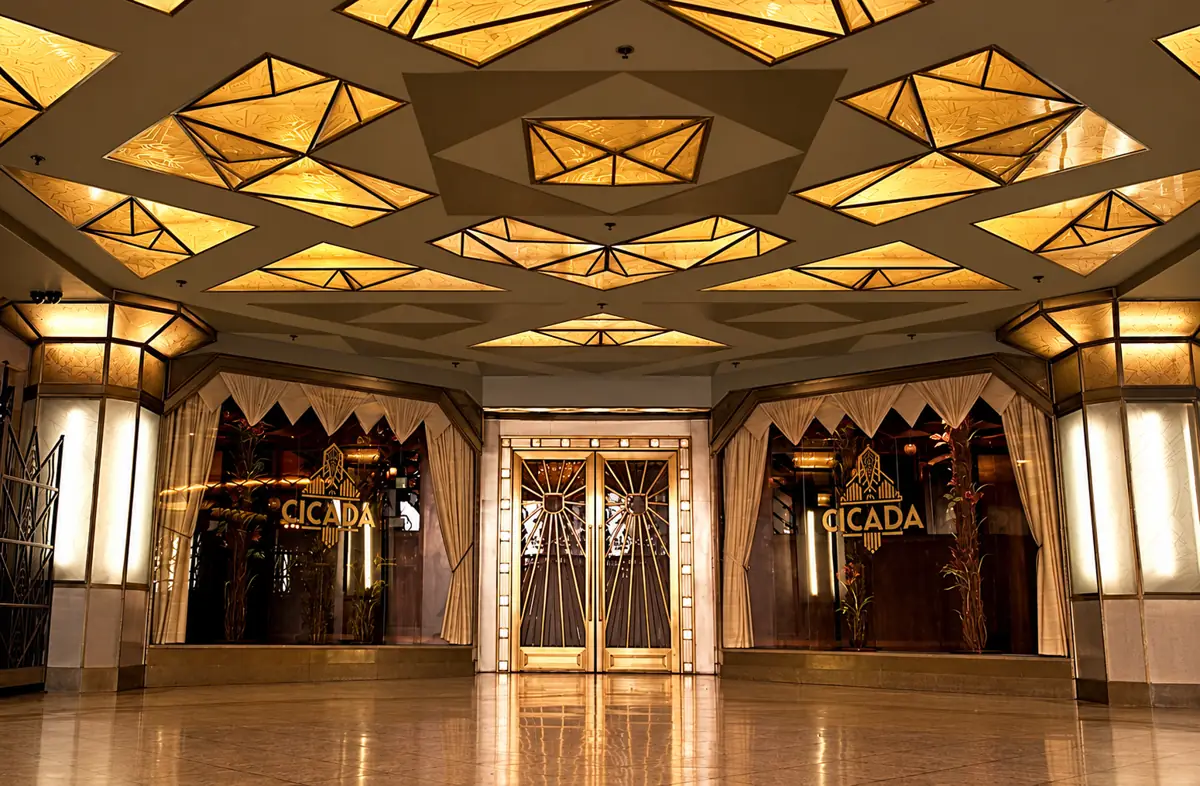
The Hollywood Roosevelt, Blossom Ballroom
Opened in 1927, the year of Metropolis. On 16 May 1929 it hosted the first Academy Awards, a dinner for 270 guests. The bridge to the Academy's centennial writes itself.
The Hollywood Roosevelt · 5 images VisualisationShortlist
Piano on a low, slowly rotating podium in the centre, round tables of eight around it
Drawings along the walls, LED wall at one end
Light barrier around the piano, no glasses on the instrument
The people
Host & curators
Metropolis 100 is a partnership: hosted in Los Angeles by Jackson Chong, curated by Taste2Mind.
Host & associate partner · Los Angeles
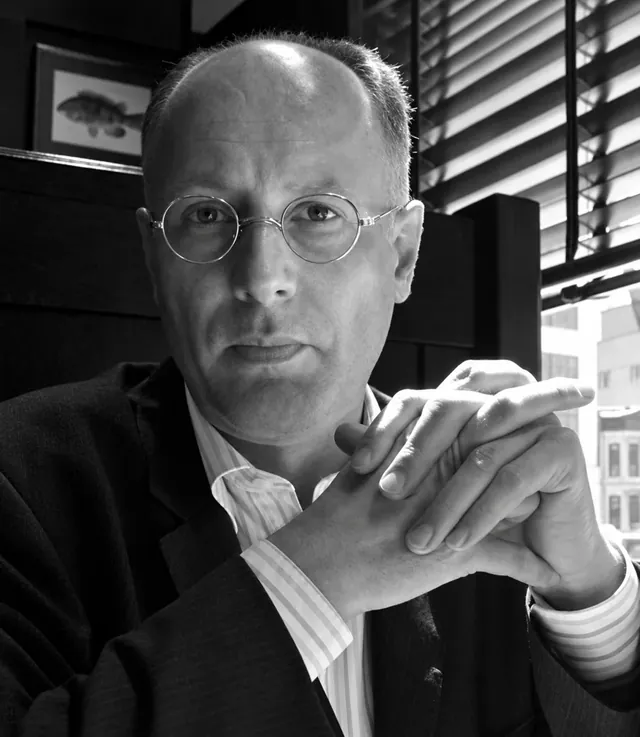
Jackson Chong
The evening is his idea: a centenary for Metropolis in the city of film, and the opening of the Academy's year.
CFO and Managing Partner of BASIC Magazine, Los Angeles. A host by vocation: he ran a private dining club in Beverly Hills built around small, curated evenings, and produced the cover shoot with Cirque du Soleil for the One Drop Foundation. For Metropolis 100 he brings the guests, the city and the partners together.
BASIC Magazine
CFO and Managing Partner of BASIC Magazine, the quarterly fashion and culture magazine founded in Beverly Hills in 2016 by photographer Viktorija Pashuta
Cover subject of Issue 20, "BASIC Influence"
BASIC covers include Steve Aoki, Isla Fisher, Zara Larsson, Alison Brie, Avril Lavigne and Cirque du Soleil
Productions
Cover shoot with Cirque du Soleil for the One Drop Foundation, staged in the theatre of "O" in Las Vegas and broadcast on CBS
Porsche Carrera Cup at the Long Beach Grand Prix Portfolio to follow
Cirque du Soleil, ALIZÉ, the first European resident show, Berlin 2025 Portfolio to follow
Private dining
Founded and ran a private club in Beverly Hills built around intimate dinners for six to ten guests, the same salon idea that drives Metropolis 100.
Partners & network
Fine dining: Alain Ducasse, Massimo Bottura
Luxury and automotive: Ferrari, Porsche
Auction: Christie's
Philanthropy: Prince Albert II of Monaco Foundation, One Drop Foundation
Portfolio to follow
Background
Came to the United States from China at thirteen, trained in accounting and built a direct-sales business in China before turning to media and events in Los Angeles.
Guests of honour
The families behind the image
Two guests who carry the history of Metropolis-era cinema in their own families, and speak for it with authority.
Guest of honour · Keynote
Prof. Alexander Luckow
Grandson of Robert Herlth, one of the great film architects of the Golden Twenties.
Professor of Media and Communication Design at Macromedia University of Applied Sciences and a partner of the brand agency cdc | brandcreation. Born in Berlin, he keeps his grandfather's drawings, a rare first-hand record of how the look of German silent film was designed.
Robert Herlth (1893–1962)
Film architect of more than 160 films
Fritz Lang's Der müde Tod (1921)
F. W. Murnau's Der letzte Mann (1924) and Faust (1926)
Der Kongress tanzt (1931)
Role on the night
Keynote on film architecture from Babelsberg to Hollywood
Original drawings from the family collection on the walls
Guest of honour · Keynote
Bertina Schulze-Mittendorff
Daughter of Walter Schulze-Mittendorff, the sculptor who created the Machine-Man of Metropolis.
She manages her father's estate and is the authority on how the most famous robot in film history was made. Through her, the figure behind the film's poster image comes to Los Angeles with its own family story.
Walter Schulze-Mittendorff (1893–1976)
Sculptor of the Maschinenmensch for Fritz Lang's Metropolis (1927)
Also created the figures of Death and the Seven Deadly Sins for the film
A 1970 replica of the robot, commissioned by Lotte Eisner, stands in the Cinémathèque française in Paris
Role on the night
Keynote on how the Machine-Man was made
Guest of honour at the host's table
The curators
Taste2Mind
Curated dinners with live music and stories, in the tradition of the European salon. Since 2024.
Voice & artistic direction
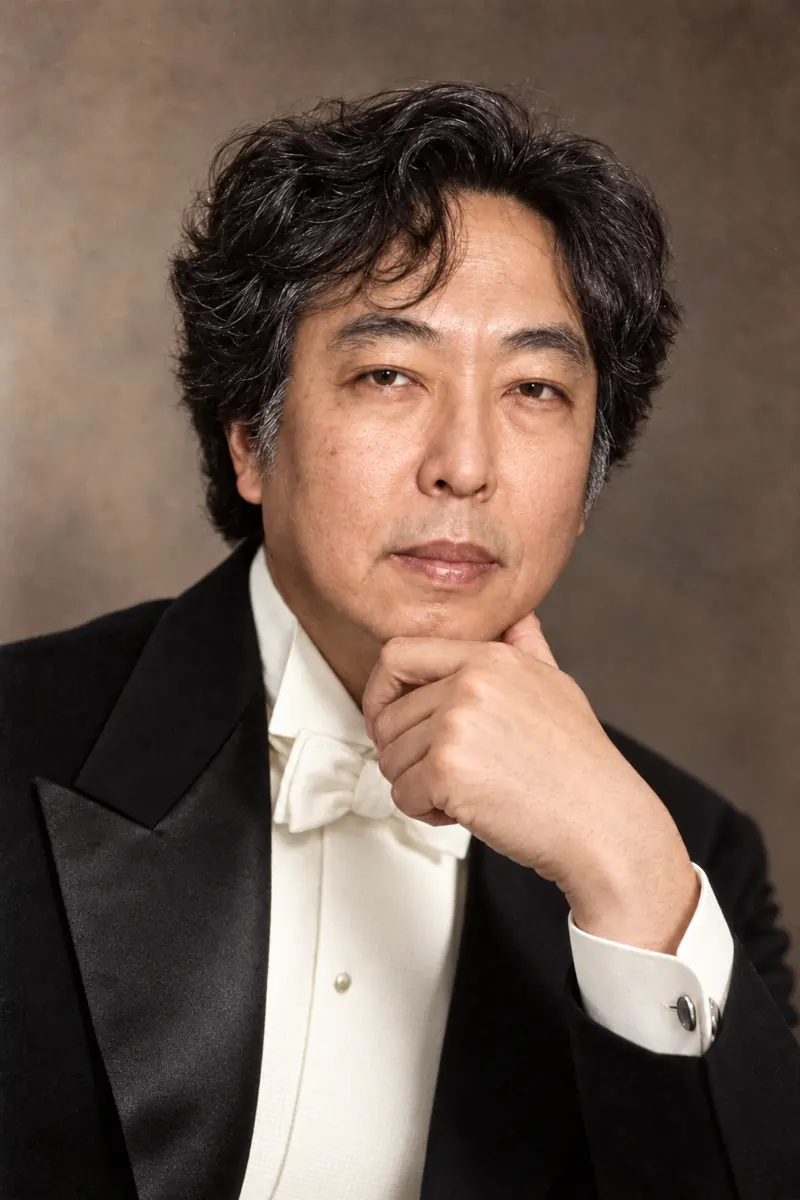
Wolfgang Rauch
German dramatic baritone with an international career from La Scala to the Vienna State Opera. He hosts and sings the evening and shapes its musical programme. Through Vocal Moments he brings opera into intimate settings.
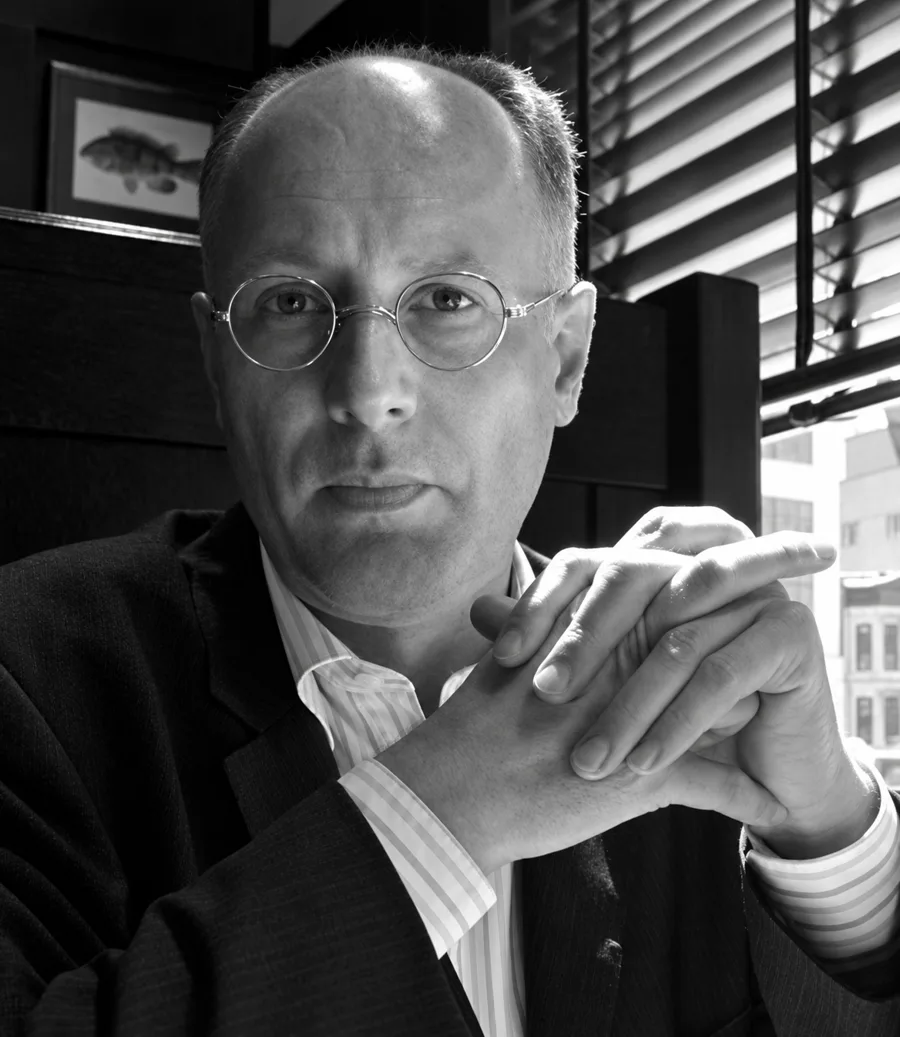
German creative producer and managing director of MORI GmbH, Berlin. He develops the concept, brings together chefs, artists and venues, and runs production, visuals and media on the night.
Responsible for organisation and delivery and for the team's internal affairs. She keeps partners, venues and artists aligned from the first call to the last guest.
Taste2Mind formats
Zu Gast bei Verdi: 19th-century Italian cuisine and opera, 20–80+ guests
Monsieur TarTare: modern French cuisine after Escoffier, black tie, 15–30 guests
Baryton Royal: concert and dinner through Wolfgang Rauch's life on stage, 35–80+ guests
Recent evenings
Private dinner, Heilbronn, 5 December 2025
Schloss Herrenstein, full house in the great hall, 21 February 2026
Resort Hotel Neuer Henningshof, full house, October 2026
Team around the evening
Prof. Alexander Luckow: guest of honour, keynote and drawings
Bertina Schulze-Mittendorff: guest of honour and keynote
Martin Pieper: former documentary editor at ARTE, curatorial advice and link to the Murnau Foundation
Michael Söhner, ComeTogether Corp., Los Angeles: brand and sponsor relations
For partners
Join the evening
Proposed partnership roles. Terms are open and will be shaped with each partner.
Host
Jackson Chong
Host and associate partner of Metropolis 100 in Los Angeles. Partner enquiries go through him and Taste2Mind.
Presenting
Presenting partner
Named with the evening, a table for guests, presence on the LED wall and in all invitations.
Charity
Auction bidder
Bids for the 1908 Ibach at the charity auction. The buyer keeps it or gives it to the Metropolitan Museum of Art as its named donor.
Culinary
Wine & culinary partner
Champagne, wine or ingredients for the menu, served and named at the table.
Culture
Cultural partners
Under discussion: Murnau Foundation, Goethe-Institut Los Angeles, Thomas Mann House, Art Deco Society of Los Angeles.